EUDR Checklist for Indonesian Coffee into the EU
Use this EUDR coffee Indonesia EU import checklist to request plot data early, so EU due diligence does not stop a shipment.
By Bayu PrasetyoHead of Green Coffee TradingQ Grader (Coffee Quality Institute) with nine years buying, cupping, and contracting Indonesian arabica and robusta for roasters in Europe, Japan, and the Gulf.
Importing Indonesian coffee into the EU now starts before the purchase order. Under the EU Deforestation Regulation, the buyer’s enquiry has to ask for the data that will later support the EU importer’s due diligence statement.
We write this from the export desk. The practical issue is timing. If plot-level data, certification scope, Incoterm, HS code, and shipment schedule are discussed only after a container is booked, the commercial deal may be ready while the EU file is not. This checklist is for buyers screening Indonesian coffee suppliers before contract.
Does EUDR apply to Indonesian green coffee imports into the EU?
Yes. Regulation (EU) 2023/1115 lists coffee in Annex I under HS 0901, so Indonesian green coffee entering the EU is within scope when it is placed on the EU market or exported from the EU.
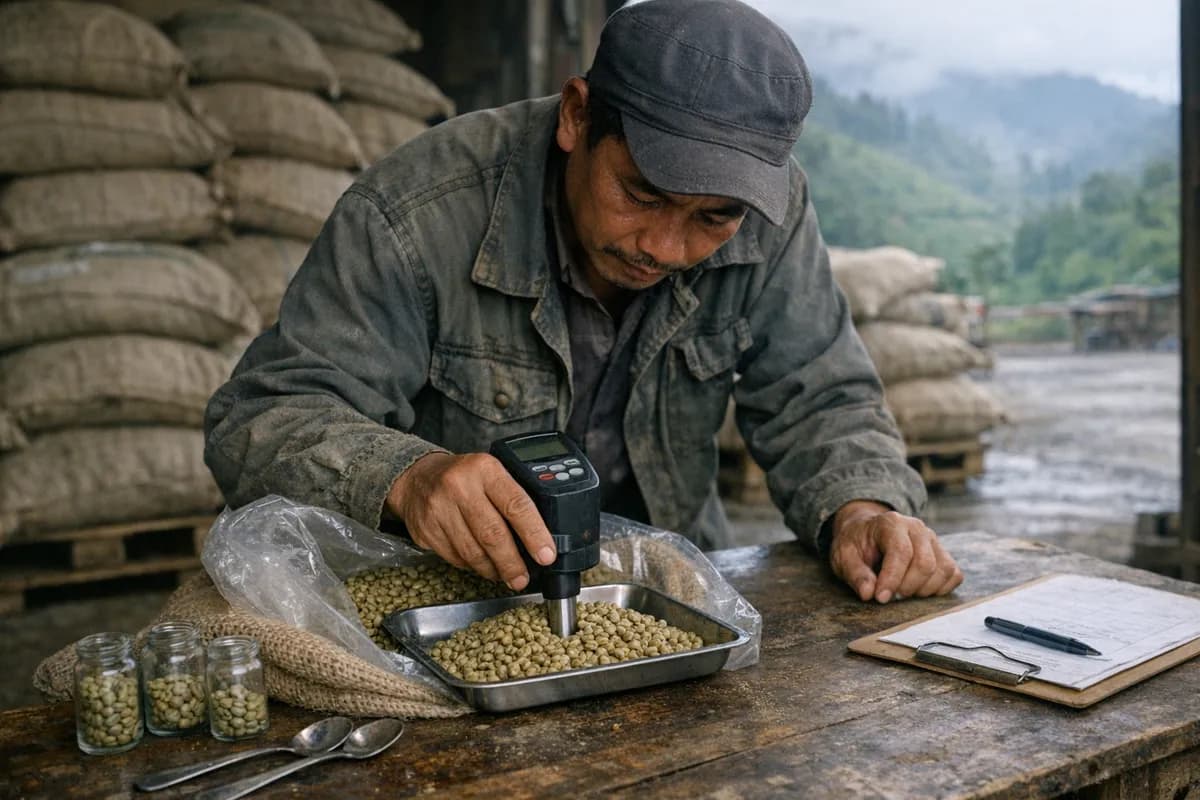
For our product range, unroasted Indonesian green coffee uses HS code 0901.11. Roasted coffee uses HS code 0901.21, which is also inside HS 0901. Buyers looking at unroasted arabica or robusta can start with our Indonesian green coffee beans range, but the EUDR question should be asked at the same time as grade, screen, moisture, packing, and shipment month.
The core EUDR test is not a certificate logo. Regulation (EU) 2023/1115 Article 3 says relevant products may be placed on the EU market only if they are deforestation-free, produced in accordance with the relevant legislation of the country of production, and covered by a due diligence statement. For deforestation, the same Regulation uses 31 December 2020 as the cut-off date.
The application date matters for contract planning. Regulation (EU) 2024/3234 amended Regulation (EU) 2023/1115 and set the main application date as 30 December 2025, with 30 June 2026 for micro and small undertakings covered by the delayed application. EU buyers should still build the file earlier because origin mapping, lot segregation, and document review are not vessel-week tasks.
What due diligence does an EU coffee importer need?
An EU importer needs a due diligence file that links the coffee to production plots, checks deforestation and legality risk, and supports the due diligence statement before the coffee is placed on the EU market. Regulation (EU) 2023/1115 Article 8 structures due diligence into information collection, risk assessment, and risk mitigation.
For an Indonesian coffee enquiry, we suggest the buyer asks for the EUDR data pack at the same time as the commercial quote. Do not treat it as an annex to be filled after price agreement. The lot you approve commercially has to be the same lot assessed for EUDR purposes.
A practical buyer checklist should include these fields:
- Product scope: green coffee or roasted coffee, HS code, species, origin, grade, process, and intended EU placing-on-market route.
- Supplier identity: exporter name, contract party, producer group or collector chain where applicable, and the party responsible for each data handover.
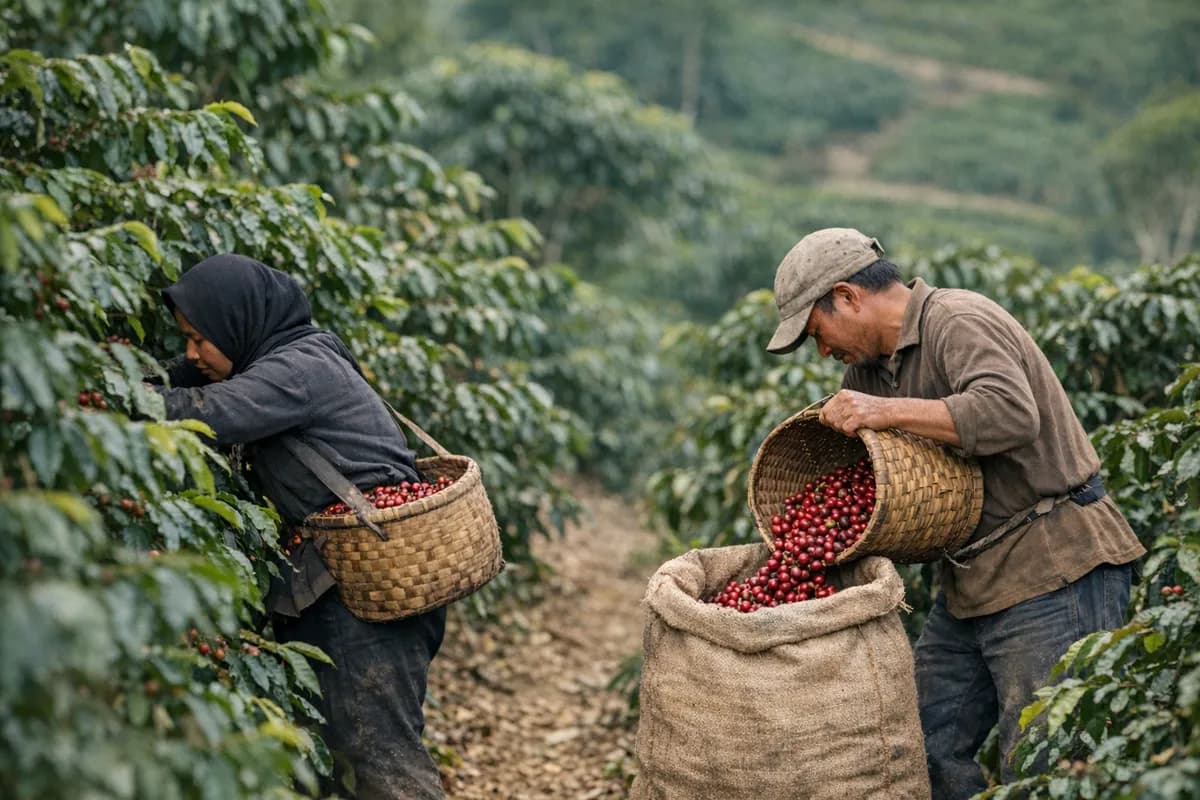
- Production information: country of production, province, district, village, producer group, plot ID, harvest period, and crop year.
- Plot geolocation: coordinates for every production plot in the lot, not only the village or cooperative office.
- Legality file: evidence that production followed relevant Indonesian laws that apply to land use, production, labour, tax, and trade for the specific supply chain.
- Segregation and traceability: the link between plots, parchment or cherry intake, milling batch, export lot, bag marks, container number, and invoice line.
- Risk review: the buyer’s own assessment of deforestation risk, legality risk, data reliability, supplier history, and any mitigation taken.
Regulation (EU) 2023/1115 Article 9 also requires the operator to collect the geolocation of all plots of land where the relevant commodities were produced, together with the date or time range of production. That is why “origin: Sumatra” or “origin: Bali” is not enough for an EU importer’s file.
If your team is comparing island origins before it chooses a compliant supply route, send the target grade, volume, destination port, and EUDR data requirement through our contact page before requesting samples.
What plot-level data should an EU buyer request from an Indonesian exporter?
Request plot-level data that can be tied to the exact export lot, not a general origin statement. The buyer should be able to trace the invoice line back to the farms or plots that supplied the coffee in that lot.
The minimum useful request is plot ID, farmer or producer group reference, village, district, province, country, harvest period, geolocation, and the link from that plot to the milling or collection batch. Where Indonesian smallholder coffee is aggregated through collectors or cooperative wet mills, ask how the supplier prevents unlisted plots from entering the EUDR lot.
Regulation (EU) 2023/1115 Article 2 defines geolocation as latitude and longitude coordinates using at least six decimal digits, and for plots of land above 4 hectares used for commodities other than cattle, the same Regulation requires polygons with enough latitude and longitude points to describe the perimeter. For coffee, that means a single village coordinate is not a substitute for plot data.
A buyer’s enquiry should ask the exporter to confirm the format before sample approval. Many EU importers now request spreadsheet fields that match their internal EUDR system. Others ask for GIS files where polygons are needed. The format is less important than consistency: the same plot reference must appear in the collection, milling, lot allocation, and export documentation trail.
For Indonesian coffee, origin names are still commercially useful, but they are not EUDR data. “Gayo highlands,” “Kintamani,” or “Toraja” tells a roaster what cup profile to expect. It does not tell an EU operator which plots produced the coffee or whether those plots pass the deforestation cut-off test.
When we review an enquiry, the clearest requests are specific. A strong brief says, for example, “EU import, green coffee HS 0901.11, EUDR plot data required, coordinates or polygons as applicable, lot-to-bag traceability required, FOB or CIF Rotterdam to be quoted.” That instruction gives the export desk and the buyer’s compliance team the same target.
How do certified Indonesian coffee lots differ under EUDR?
Certified lots can support the evidence file, but certification does not automatically replace EUDR due diligence. The EU importer still needs to meet the legal requirements of Regulation (EU) 2023/1115 before placing the coffee on the EU market.
Certification is useful because it may already require farm records, internal inspections, producer lists, chain-of-custody controls, or audit trails. The practical value depends on the standard, the certificate scope, the exact producer group, and whether the certified volume is the same volume being shipped. A certificate for one supply group cannot be treated as proof for a different group.
In our Indonesian green range, certification differs by origin and product. Kintamani Bali Arabica Green Coffee Beans carry Organic EU/NOP and Fairtrade options, and buyers can review that origin through our Kintamani Bali Arabica Green Coffee Beans page. Gayo Sumatra Arabica Green Coffee Beans carry Rainforest Alliance, ISO 22000, and Halal BPJPH options. Several robusta origins carry 4C, including Lampung, Java, Bali, Flores, and Sulawesi robusta lines.
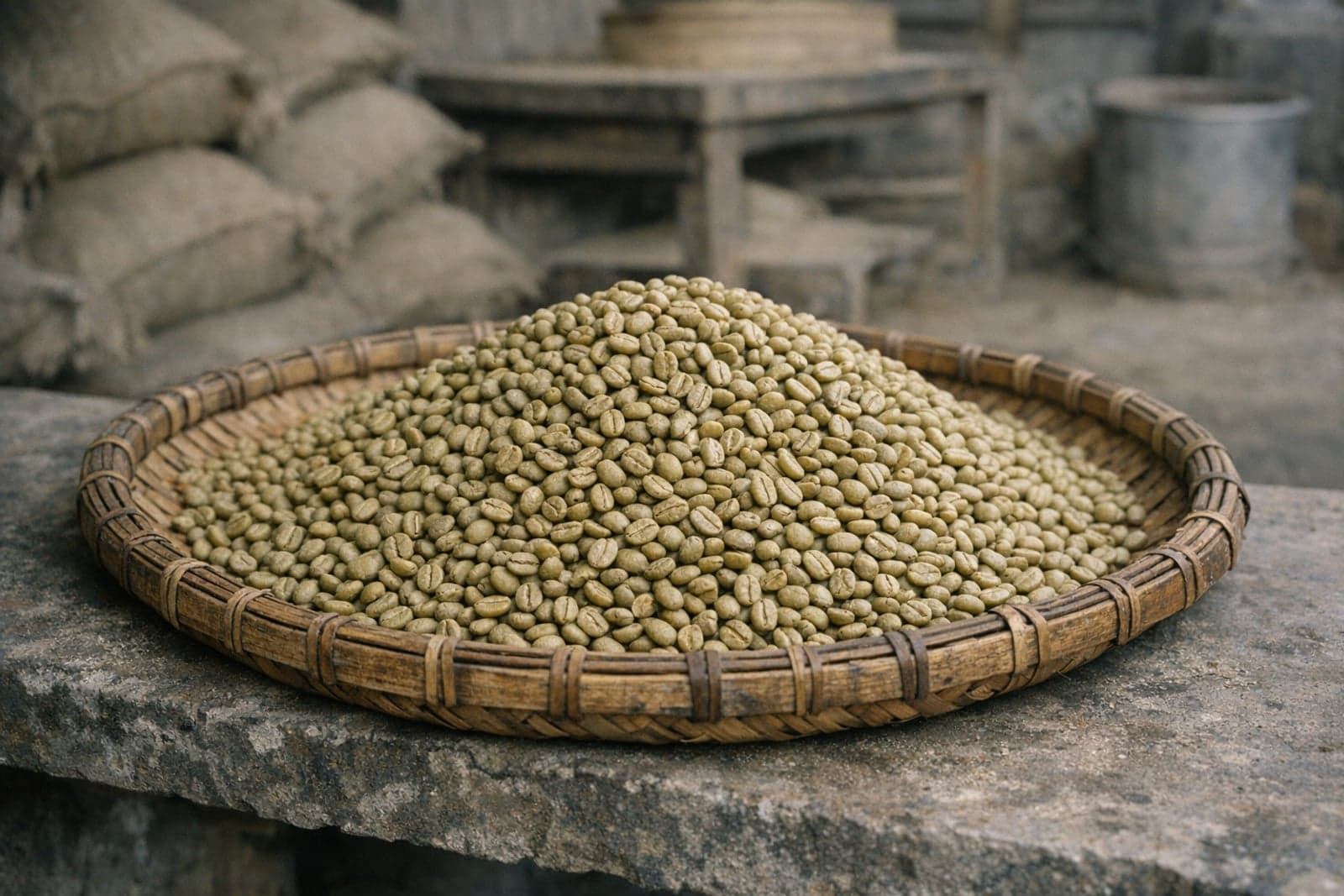
Coffee in this article
Kintamani Bali Arabica Green Coffee Beans
Washed Kintamani arabica from subak abian cooperatives, Organic and Fairtrade, offered in grades 1 to 6.
Organic (EU/NOP) · Fairtrade · ISO 22000
View specificationsFor specialty arabica buyers, certification should be considered alongside cup and traceability. Our specialty Indonesian arabica lots group the Grade 1 arabicas that are cupped at 83 points or better, but an EU buyer should still ask which lot, producer group, certification scope, and plot data are available for the shipment under discussion.
The wording in the purchase order should be exact. If certification is required, state the standard, the product, the contract quantity, the certificate scope, and whether the certificate must appear on transaction documents. If EUDR data is required, state that separately. Combining both into one vague line such as “certified and compliant coffee” creates room for mismatch.
When should a buyer ask for EUDR documentation?
Ask at enquiry, before price is fixed and before samples are treated as approved for purchase. EUDR documentation affects lot selection, supplier checks, data review, shipment timing, and sometimes the commercial route.
The best sequence is simple. First, send the product brief with EUDR requirements. Second, review the supplier’s available lot data before or alongside samples. Third, approve the sample only for a lot that can be documented. Fourth, put the EUDR data requirement, Incoterm, destination port, documents, and shipment period into the contract.
If the buyer waits until the coffee is milled and bagged, the exporter may be able to provide ordinary shipping papers, but plot-level evidence may not match the selected lot. That is the risk. EUDR is not only a document request. It is a lot-allocation requirement.
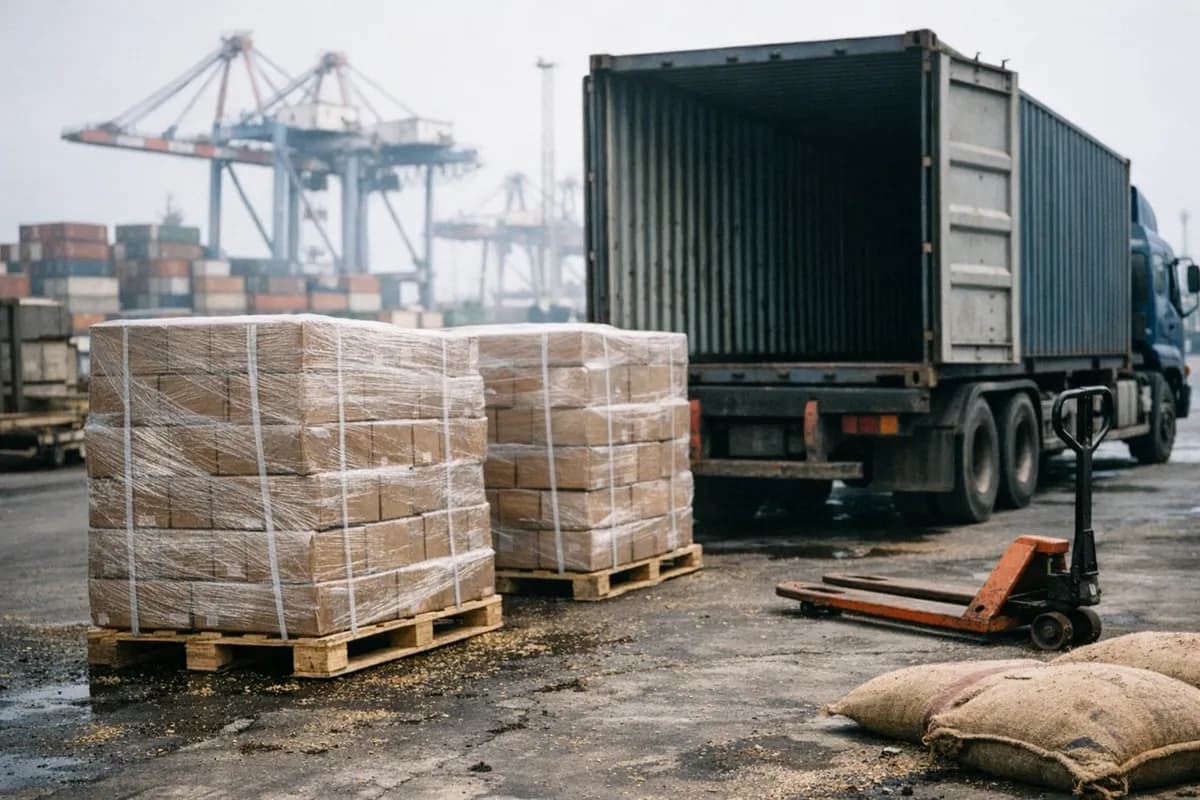
For green coffee, our commercial shipping frame is as follows: FOB, CFR, or CIF are available; Sumatra, Java, and Sulawesi green lots start from 19.2 MT per grade, equal to 1 x 20 ft FCL or 320 bags; Bali and Flores green lots start from 9.6 MT per grade, equal to a half FCL or 160 bags. Lead time from contract ranges from 2 to 5 weeks depending on origin and preparation, with Lampung and Java robusta at the shorter end and Toraja or Flores lots at the longer end.
Price should be discussed after the lot and compliance route are clear. Grade, screen, origin, certification, packing, Incoterm, volume, harvest timing, and freight all affect the number. Arabica quotations normally reference the ICE Coffee C futures market plus or minus an origin differential, while robusta quotations normally reference the ICE London Robusta futures market plus or minus an origin differential. We do not put spot prices in static articles because they become stale quickly.
If your internal approval needs a landed estimate, ask for CFR or CIF with the named EU port. If your freight team controls the booking, ask for FOB and give the load port preference if you have one. Either way, the EUDR data request should be attached to the enquiry, not left for the document release stage.
What should be checked before the Indonesian coffee ships?
Before shipment, check that the commercial lot, EUDR data, packing list, bill of lading instructions, and invoice line all describe the same coffee. A clean EU import file is built by matching data across systems, not by collecting unrelated documents.
The buyer should run five checks before container booking. First, confirm product scope and HS code. Green coffee from our range uses HS 0901.11, while roasted coffee uses HS 0901.21. Second, confirm the Incoterm and named port. “CIF EU” is not a working instruction, while “CIF Antwerp” or “FOB Indonesia” can be quoted and documented.
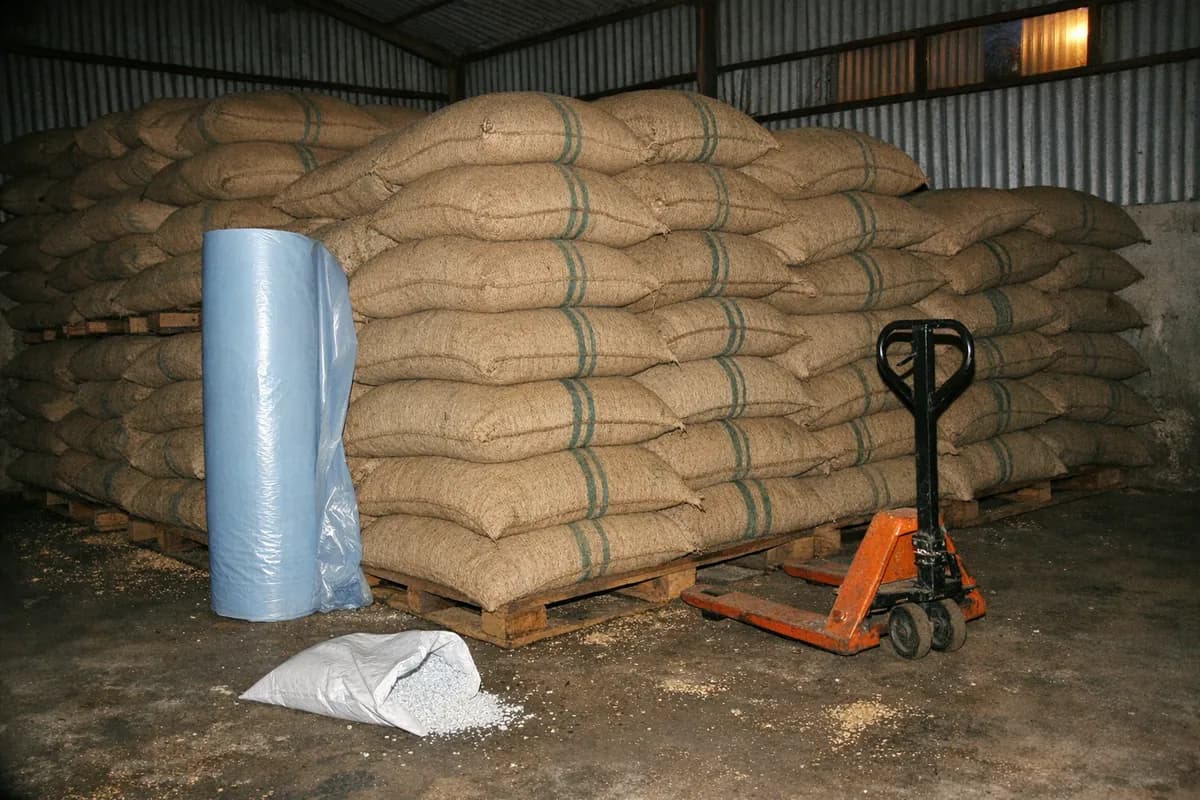
Third, confirm that the EUDR plot list matches the lot being shipped. The plot IDs, producer group references, harvest period, and geolocation data should not describe a different stock position. Fourth, confirm packing and bag count against the purchase order. Our green arabica lots use 60 kg jute bags with GrainPro liner, while our green robusta lots use 60 kg jute bags with a container liner and desiccant. Fifth, confirm the document set with the customs broker before departure, including any certificate of origin or phytosanitary requirement your EU entry process needs.
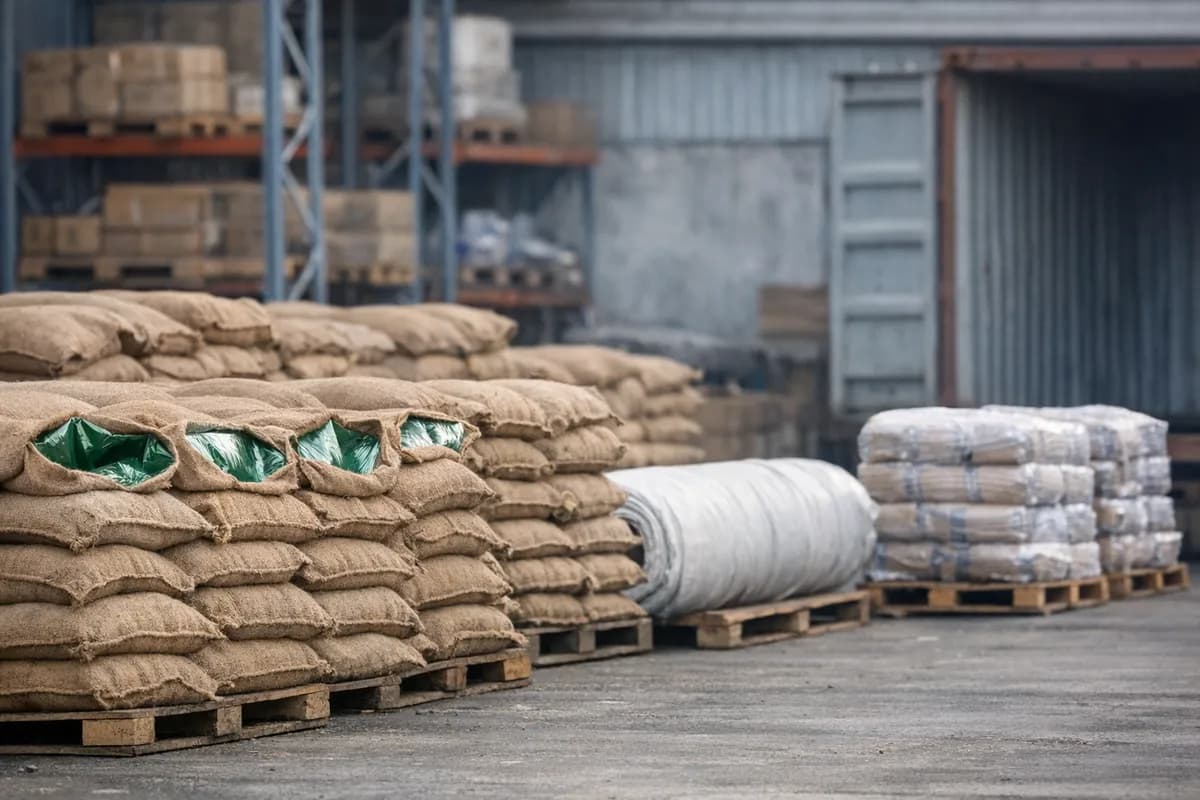
The final control is internal ownership. Procurement, compliance, logistics, and quality should not run separate versions of the same order. One contract line should carry the product specification, EUDR request, certification requirement if any, Incoterm, shipment period, and document instructions.
That is the discipline we recommend for EUDR coffee Indonesia EU import planning: request plot-level data at enquiry, approve only documentable lots, then ship against the exact line your EU due diligence file can support. For a current origin shortlist and quotation, send your EU port, target coffee, volume, and EUDR data format through our contact page.