Indonesian Robusta for Instant Coffee Extraction
Use this guide to match robusta coffee for instant coffee Indonesia to soluble plant intake specs before requesting samples.
By Bayu PrasetyoHead of Green Coffee TradingQ Grader (Coffee Quality Institute) with nine years buying, cupping, and contracting Indonesian arabica and robusta for roasters in Europe, Japan, and the Gulf.
Indonesian robusta for instant coffee is bought on function before origin story. A soluble plant needs a green coffee that can pass intake, roast evenly enough for extraction, deliver the expected caffeine range, and fit the plant’s defect tolerance after cleaning.
We write this from the export desk. For instant coffee and liquid extract buyers, our job is to turn a plant specification into a contract line: origin, SNI grade, screen, moisture, caffeine range, packing, shipment timing, Incoterm, and documents. The grade that works for one extractor is not always the grade that works for another, because plant cleaning capacity and finished-product target are different.
Which robusta grade is used for instant coffee?
For instant coffee, buyers commonly evaluate Grade 4a or Grade 4b when the plant has suitable cleaning, colour sorting, and extraction controls, while Grade 1 to Grade 3 are used when the intake specification is tighter. Grade 5 or Grade 6 can be considered only when the buyer’s defect tolerance and pre-cleaning system are built for that material.
Indonesia’s green coffee grading reference is SNI 01-2907. The Indonesian National Standard SNI 01-2907 grades green coffee by defect value in a 300 g sample, with Grade 1 at 0 to 11, Grade 2 at 12 to 25, Grade 3 at 26 to 44, Grade 4a at 45 to 60, Grade 4b at 61 to 80, Grade 5 at 81 to 150, and Grade 6 at 151 to 225. That defect band is the starting point for a soluble plant conversation, not the whole specification.
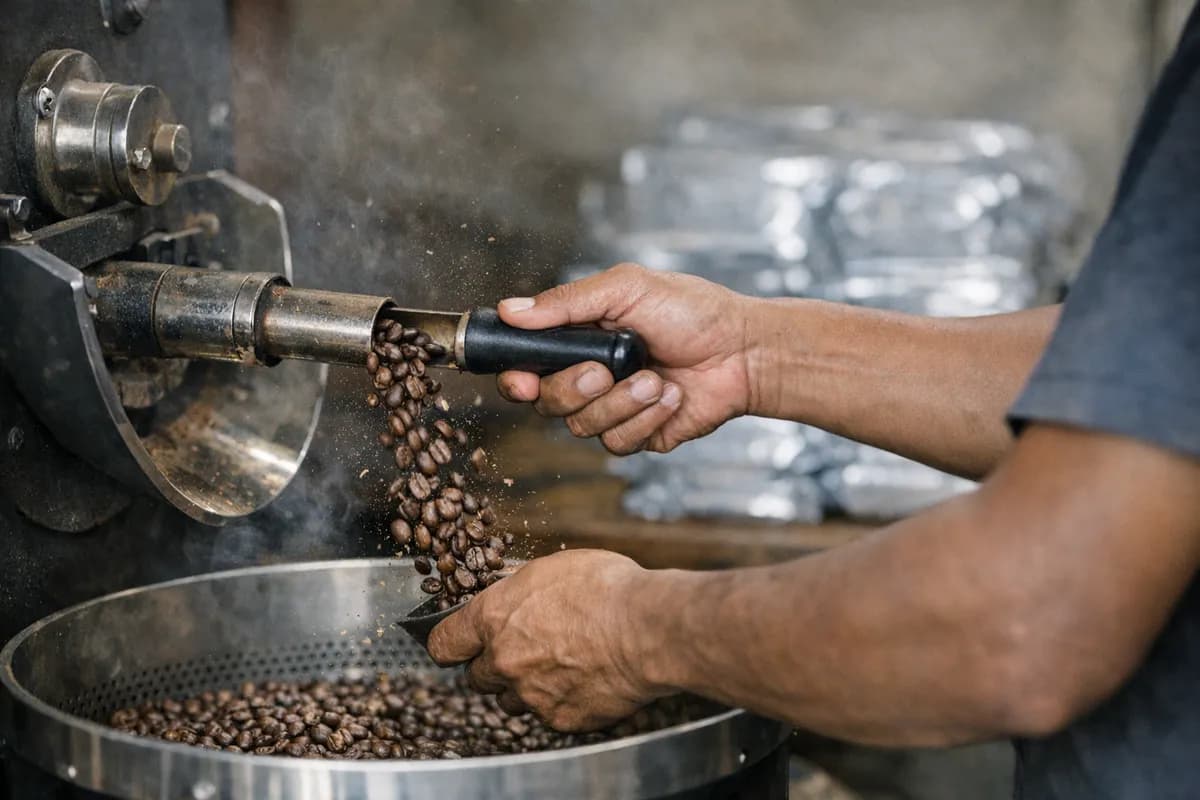
The reason Grade 4a and Grade 4b are often discussed for soluble use is economic. A soluble plant is not selling whole beans. It is converting roasted and ground coffee into extract, then into spray-dried, freeze-dried, or liquid format. If the plant can remove foreign matter and control taints, a lower physical grade may deliver better input cost per kilogram of soluble output than a visually cleaner grade.
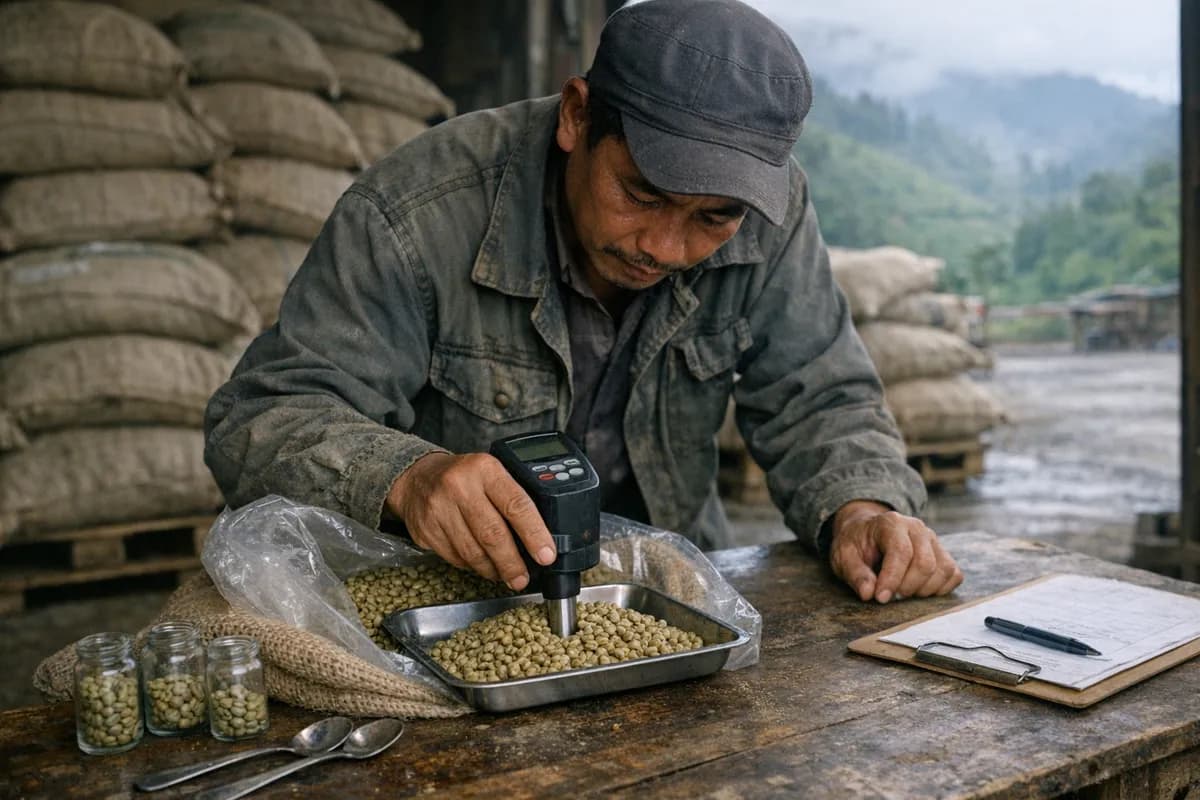
There are limits. A higher defect count can affect odour, cup cleanliness, roast consistency, and extract taste. Some defects are also more serious than others in a factory intake. A plant that rejects mouldy odour, black beans, foreign material, or heavy phenolic notes should write those rejection points into the buying brief instead of relying only on an SNI grade number.
For a first trial, we usually prefer a narrow comparison rather than a broad sample set. A buyer can test Grade 3 against Grade 4a, or Grade 4a against Grade 4b, then measure roast loss, extraction yield, soluble solids, cup character after concentration, and residue in the plant’s own system. Our Indonesian robusta for soluble coffee and extraction range is set up for that type of grade comparison.
What is EK-1 robusta?
EK-1 robusta is an Indonesian trade reference for larger-screen robusta, and in our robusta offers it means screen 16 up. We offer EK-1 screen on Lampung Sumatra robusta and Kolaka Sulawesi robusta, with 90% retention.
Screen is separate from grade. Grade measures defects. Screen measures bean size. A lot can be screen 16 up and still be Grade 4a, or screen 13 up and Grade 1, depending on sorting result and defect count. Soluble buyers should keep those fields separate in the purchase order because they affect different parts of the factory process.
For extraction, screen size matters because it influences roast behaviour and grinder setting. Larger beans can give more even roasting when the roaster is tuned for them. Smaller beans can still work well, but the plant should test them under its own roast curve and extraction setup. If the grinder, percolator bed, or extraction column is sensitive to particle distribution, the screen decision should be part of the trial.
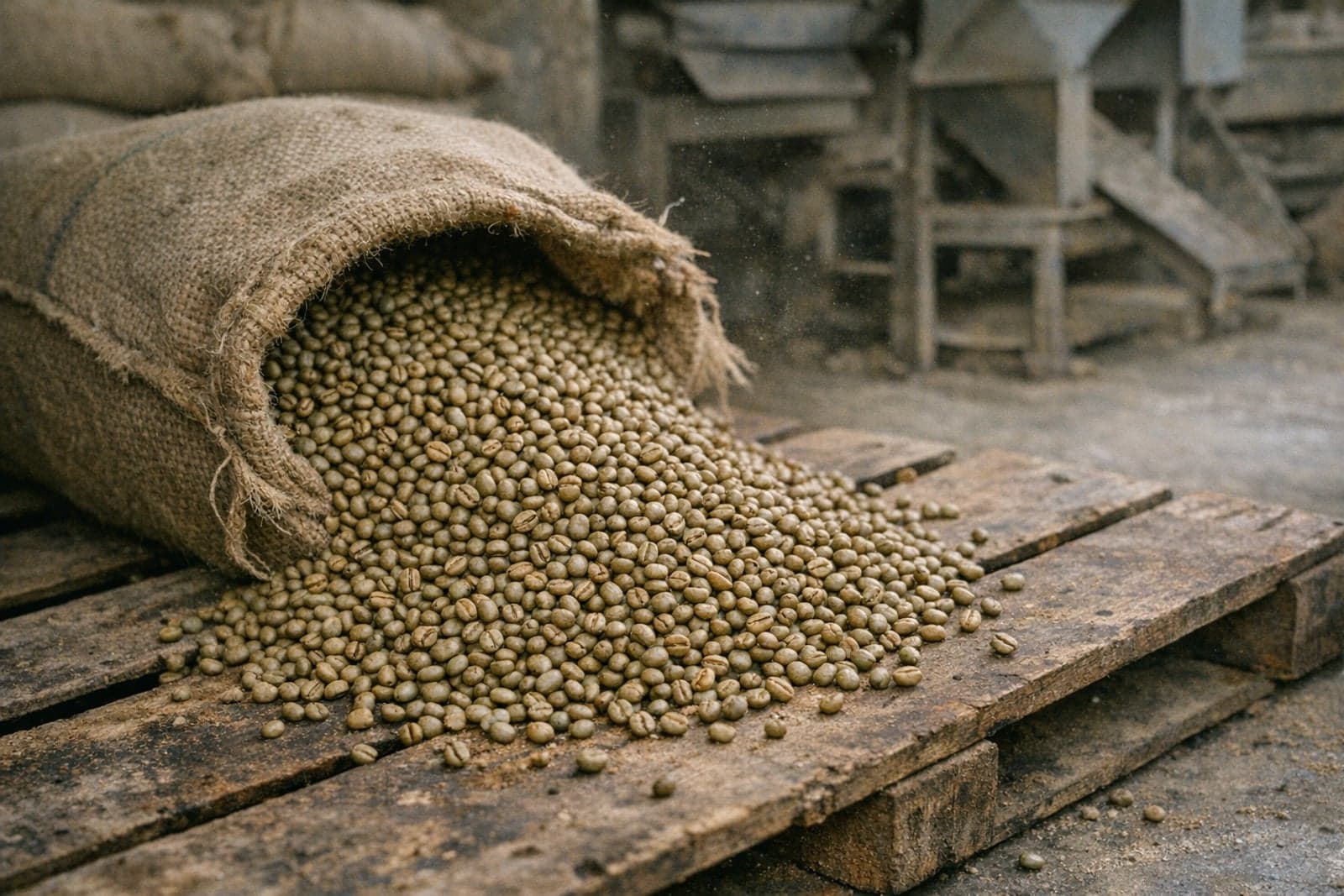
Our Lampung Sumatra Robusta Green Coffee Beans line is the usual starting point for EK-1 discussions because Lampung is the Indonesian robusta origin most buyers associate with volume. The full Lampung contract specification is: grown at 300 to 800 m asl in Lampung and South Sumatra, sun dried natural, machine hulled and polished, available in Grade 1, 2, 3, 4a, 4b, 5, and 6 under SNI 01-2907 with Grade 1 by default, screen 16 up as EK-1 screen or 13 up with 90% retention, 12.0 to 12.5% maximum moisture, 2.2 to 2.7% caffeine on a dry basis, current crop with main harvest May to September, packed in 60 kg jute bags with container liner and desiccant, MOQ 19.2 MT or one 20 ft FCL with 320 bags per grade, lead time 2 to 3 weeks from contract, available with 4C, ISO 22000, and Halal BPJPH, offered under FOB, CFR, or CIF, HS code 0901.11.
Coffee in this article
Lampung Sumatra Robusta Green Coffee Beans
Indonesia's volume robusta from Lampung and South Sumatra, quoted across the full ladder from Grade 1 to Grade 6.
4C · ISO 22000 · Halal (BPJPH)
View specificationsIf your plant already runs Indonesian EK-1, send us your current screen, grade, and destination port through the contact page so we can quote against the same intake basis rather than a generic robusta line.
What moisture should extraction robusta have?
Our green robusta for extraction is specified at 12.0 to 12.5% maximum moisture. A buyer with a stricter warehouse intake limit should state that limit before we quote.
Moisture is not just a storage number. It affects net solids planning, roast behaviour, shipping risk, and receiving decisions. A plant comparing two offers should not compare price alone if one lot is offered at a different moisture basis or if the measurement method is not clear in the approval file.
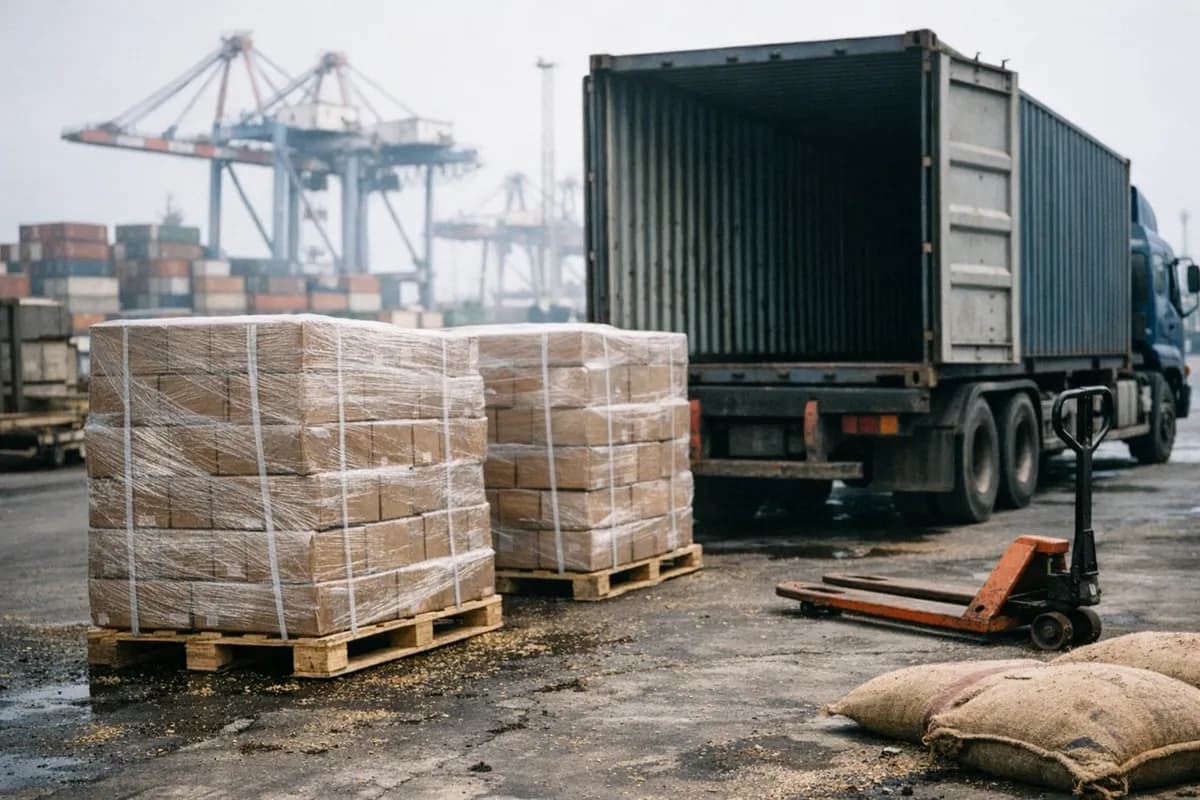
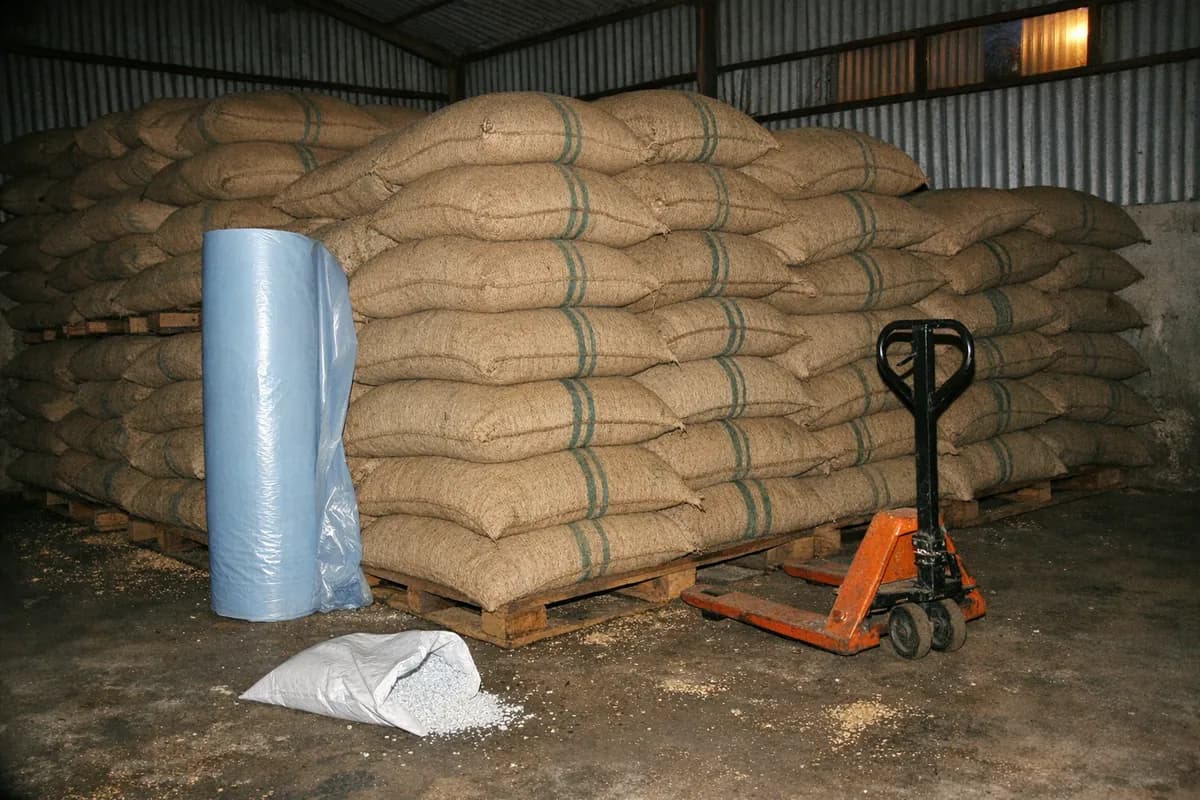
For Indonesian robusta shipped in containers, we pack green robusta in 60 kg jute bags with a container liner and desiccant. That packing format is intended to manage container conditions during ocean transit, but it does not replace good receiving practice. The buyer still needs a dry warehouse, inspection on arrival, and a sampling plan that checks bags from different parts of the container.
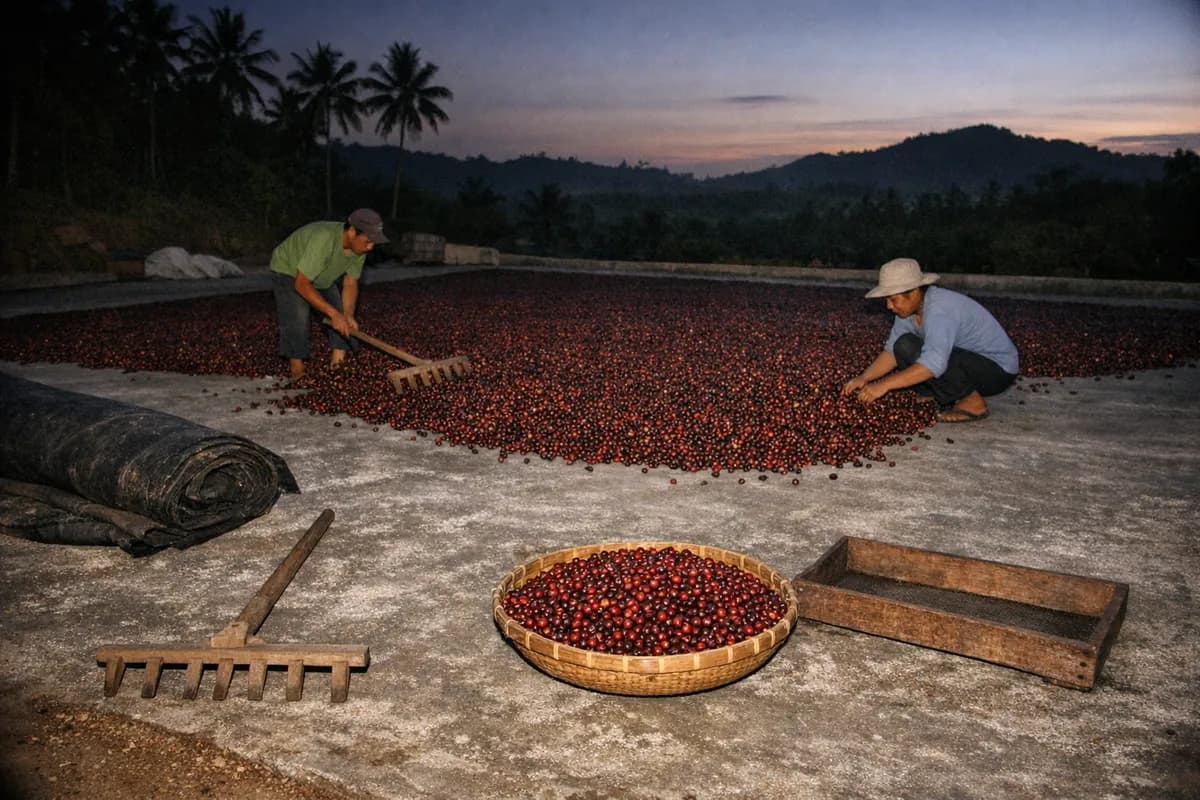
Moisture also interacts with season. Lampung’s main robusta harvest in our supply calendar is May to September. Java robusta is June to October. Bali robusta is June to September. Flores robusta is May to August. Kolaka Sulawesi robusta is June to October. A plant buying late in a crop cycle should allow time for offer sampling and re-checking, especially when the contract is for a specific grade and screen.
For intake control, write the moisture limit into the contract line and match it to your sampling protocol. If your receiver uses oven verification, state that. If your intake is based on a handheld meter calibrated to your internal method, align the approval sample with the same method where possible.
Why is Lampung robusta used in volume?
Lampung robusta is used in volume because it is Indonesia’s main commercial robusta reference for many buyers, with a broad grade ladder and EK-1 or smaller-screen options available from the same origin. For soluble plants, that makes Lampung a practical starting point for repeat contracts.
From a buyer’s desk, Lampung has three practical advantages. First, it can be specified across Grade 1, 2, 3, 4a, 4b, 5, and 6, so a plant can run trials at different defect bands without changing country origin. Second, it offers EK-1 screen 16 up or screen 13 up, which lets the buyer test size and grade as separate variables. Third, the lead time is 2 to 3 weeks from contract on our Lampung green robusta line, which supports commercial planning when the specification is already approved.
Lampung is not the only Indonesian robusta option. Java robusta from Garut and Temanggung has a caffeine range of 2.0 to 2.5% dry basis, lower than Lampung’s stated range. That can matter when the buyer is balancing caffeine in a finished soluble blend. Our Java Robusta Green Coffee Beans line is also available from Grade 1 through Grade 6 with 4a and 4b, with screen 13 up as standard and screen 16 up on request.
Kolaka Sulawesi robusta offers another direction. It has the highest caffeine range in our robusta list at 2.3 to 2.8% dry basis and is available as EK-1 screen 16 up or screen 13 up. Buyers formulating for a stronger caffeine contribution may want to include Kolaka in the trial set, while still checking cup impact after extraction.
Bali and Flores robusta are usually more suitable when the buyer needs smaller allocations or island-specific blending options. Pupuan Bali robusta and Flores Manggarai robusta start from 9.6 MT per grade, while Lampung, Java, and Sulawesi start from 19.2 MT per grade. That difference matters when a plant wants a production trial before a full container programme.
How do soluble plants contract Indonesian robusta?
Soluble plants contract Indonesian robusta by fixing the functional intake line first: origin, SNI grade, screen, moisture, caffeine range where relevant, packing, quantity per grade, Incoterm, destination port, shipment month, and required certificates. The sample should be tested in the plant process before the contract is scaled.
A practical buying sequence is short. First, the buyer sends the plant specification and target use, for example spray-dried soluble, freeze-dried soluble, liquid extract, or a roast and ground blend for extraction. Second, we propose one or two origins and grades. Third, the buyer tests the sample for defect tolerance, roast loss, extract yield, cup character, residue, and any internal food safety checks. Fourth, the approved specification becomes the contract line.
The minimum order and price context should be addressed before sampling turns into procurement work. Our MOQ for Lampung, Java, and Sulawesi robusta green coffee is 19.2 MT per grade, equal to one 20 ft FCL or 320 bags of 60 kg. Bali and Flores robusta green lots start from 9.6 MT per grade. Price is driven by grade, screen, origin, caffeine range, certification, packing, Incoterm, volume, crop timing, and freight. Robusta quotations normally reference the ICE London Robusta futures market plus or minus an origin differential, with freight and insurance added according to FOB, CFR, or CIF. We do not quote spot prices in articles because terminal markets and differentials move.
Certification should be matched to the actual origin. Lampung robusta carries 4C, ISO 22000, and Halal BPJPH in our product facts. Java robusta carries 4C, Rainforest Alliance, and ISO 22000. Kolaka Sulawesi robusta carries 4C, Rainforest Alliance, and Halal BPJPH. If a certificate is mandatory for your soluble customer, write it into the request before the offer is issued.
Contracting also needs a clear rejection procedure. For extraction robusta, we recommend that the buyer defines the retained sample, pre-shipment sample approval, defect count method, moisture check, and any odour rejection point. A plant that says “for instant coffee” has not given enough information. A plant that says “Lampung robusta, Grade 4a, screen 16 up, 12.5% maximum moisture, 19.2 MT, CIF named port, 4C required, pre-shipment sample approval required” has given us a line we can quote and prepare.
How should Grade 1 to 6 be matched to the extraction plant?
Match the grade to the plant’s cleaning capacity and finished product target, not to a general idea that higher grade is always better. For instant coffee, the right answer is the lowest grade that still passes the plant’s intake, extraction, and finished cup requirements.
Grade 1 to Grade 3 make sense when the buyer needs tighter physical preparation. This can apply to plants with limited pre-cleaning, strict foreign matter controls, a light soluble profile, or a customer specification that restricts visible defects before roasting. The trade-off is cost. If the extraction system does not need that level of physical cleanliness, the plant may be paying for preparation it cannot recover in yield or selling price.
Grade 4a and Grade 4b are often the practical trial zone for soluble extraction because they sit between clean preparation and lower-cost raw material. The plant must still test odour, taint risk, roast behaviour, extraction performance, and residue. A Grade 4b that performs cleanly in one factory may fail in another if the receiving line, colour sorter, or extraction profile is different.
Grade 5 and Grade 6 should be treated as technical raw material, not a default cheap substitute. They require more confidence in cleaning and stronger controls around defect-related flavour. If a buyer is considering those grades, we prefer to see a written intake tolerance and a plant trial before discussing repeat shipment.
For Indonesian robusta for instant coffee, the strongest specification is usually simple and measurable: choose the origin, choose the SNI grade, decide EK-1 or screen 13 up, fix 12.0 to 12.5% maximum moisture, then test the sample in your own extraction line. If you want to compare Lampung, Java, and Kolaka on that basis, review our Indonesian Robusta Coffee Beans range and send the target plant specification before asking for the final quote.