Wet Hulled vs Washed Indonesian Coffee Lots
For wet hulled vs washed coffee Indonesia buyers, this guide shows how giling basah changes cup, moisture risk, and roast choice.
By Bayu PrasetyoHead of Green Coffee TradingQ Grader (Coffee Quality Institute) with nine years buying, cupping, and contracting Indonesian arabica and robusta for roasters in Europe, Japan, and the Gulf.
Indonesian arabica is not one processing style. A Gayo or Toraja wet hulled lot will not cup, store, or roast like a fully washed Ijen Java or Kintamani Bali lot, even when all four are sold as Grade 1 arabica.
We write this from the export desk for buyers comparing wet hulled vs washed coffee Indonesia supply. The useful question is not only which cup is better. It is which process fits your roast profile, moisture control, customer brief, certification need, and contract size.
What is wet hulled coffee in Indonesia?
Wet hulled coffee in Indonesia is coffee where the parchment is removed while the bean is still at a high moisture stage, then the green bean is dried further before export preparation. In Indonesian trade, the method is known as giling basah.
For buyers, wet hulling is a process variable with direct commercial effects. It changes the appearance of the green, the way the coffee releases moisture in roasting, and the cup profile you should expect in an approval sample. We offer wet hulled arabica from Sumatra and Sulawesi through our wet hulled Indonesian coffee selection.
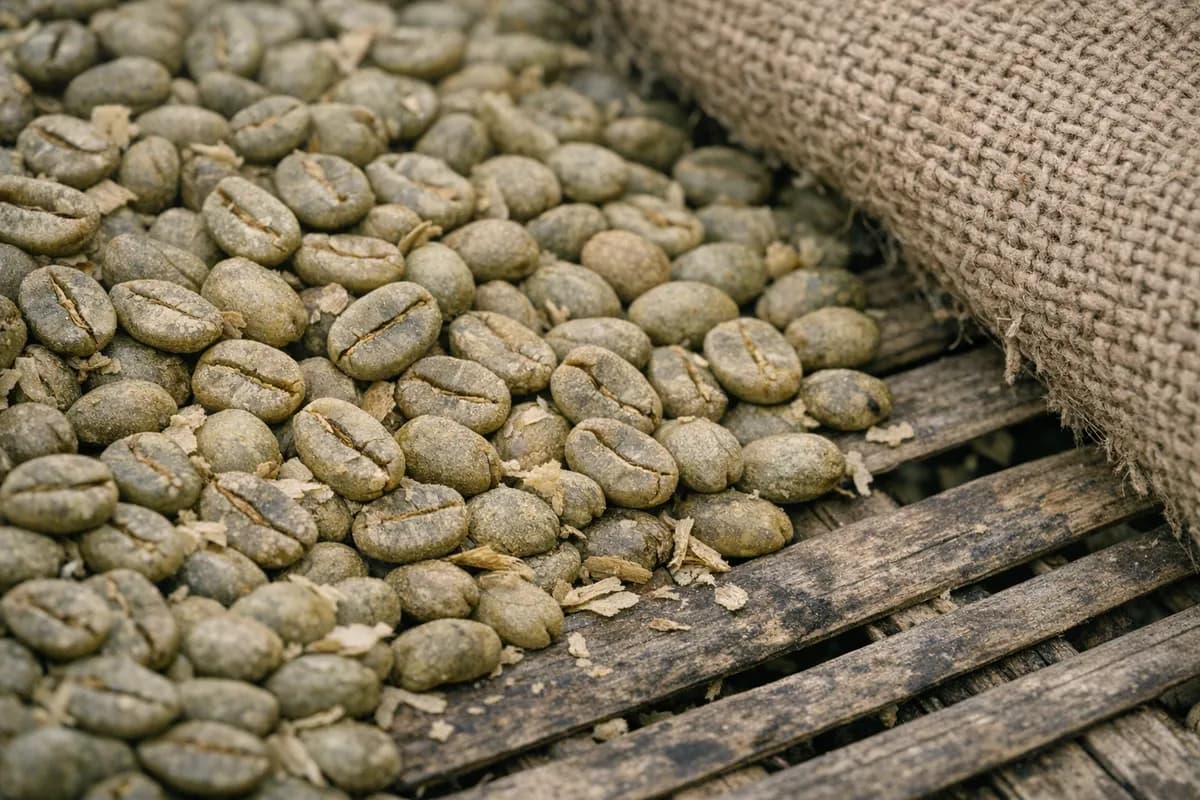
Our Gayo Sumatra arabica is grown in the Gayo highlands and Lintong area at 1,100 to 1,600 m asl. It is wet hulled, then patio and raised-bed dried. Our Toraja Sulawesi arabica is grown in the Toraja highlands at 1,400 to 1,900 m asl. It is also wet hulled, then shade and raised-bed dried.
The cup target is different from a washed Java. A wet hulled lot is usually bought for body, lower perceived acidity, and the classic Indonesian profile that works in single-origin dark filter, milk-based espresso, or as a body component in an arabica blend. If your brief needs a wet hulled Sumatran base, review the current specification for Gayo Sumatra Arabica Green Coffee Beans before requesting samples.
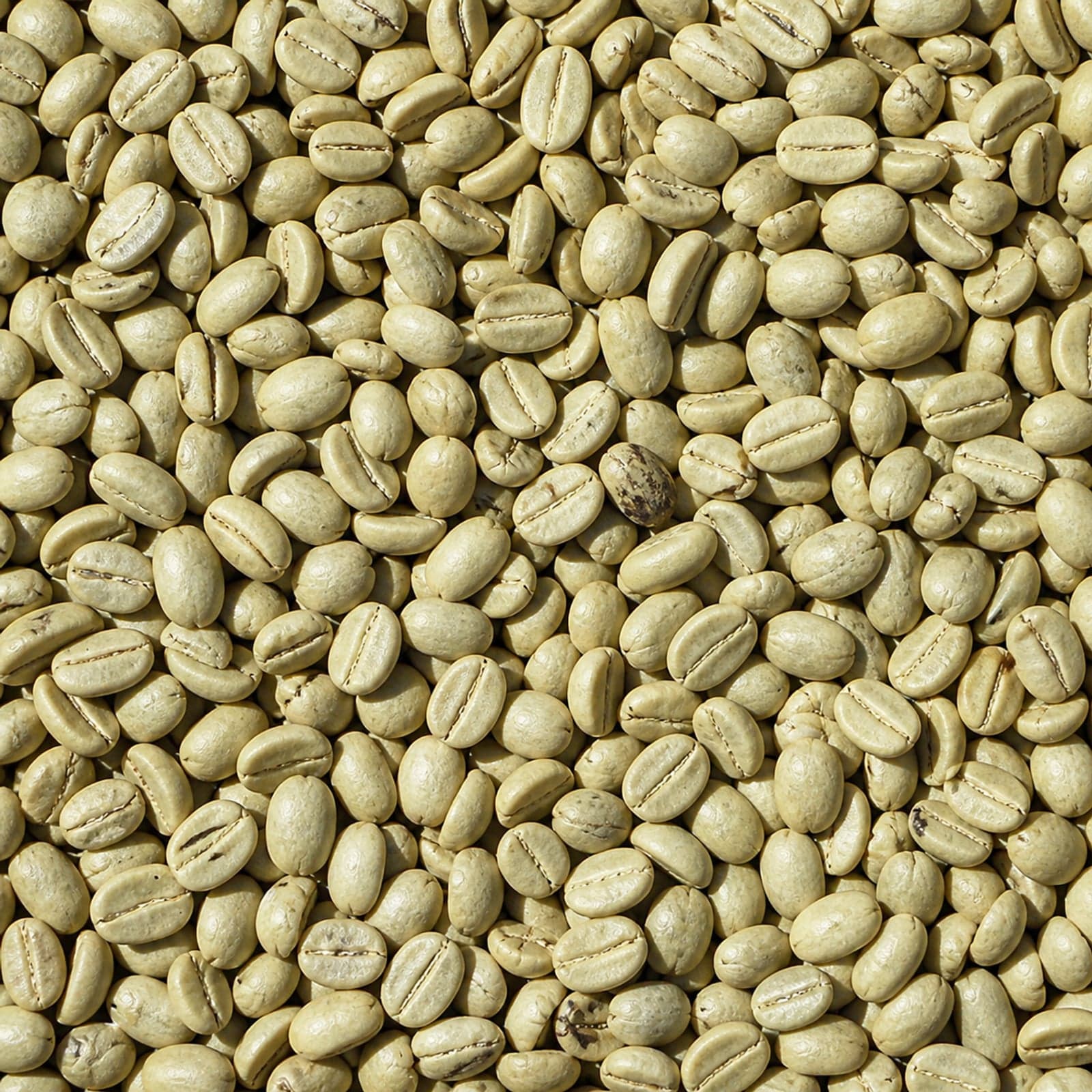
Coffee in this article
Gayo Sumatra Arabica Green Coffee Beans
Wet hulled arabica from the Gayo and Lintong highlands, offered from Grade 1 through Grade 6 on the same coffee.
Rainforest Alliance · ISO 22000 · Halal (BPJPH)
View specificationsWhat is giling basah compared with fully washed processing?
Giling basah is the Indonesian term for wet hulling, while fully washed coffee keeps the parchment on through fermentation, washing, and more controlled drying before hulling. The practical difference for a buyer is that washed lots usually give a cleaner acidity line and more predictable roast colour development.
In our washed arabica range, Ijen Java is fully washed with an 18 hour ferment and a mechanical drying finish. Kintamani Bali is fully washed through subak abian cooperative wet mills. Both are specified at 10.5 to 12.0% moisture, while our wet hulled Gayo and Toraja lots are specified at 11.0 to 12.5%.
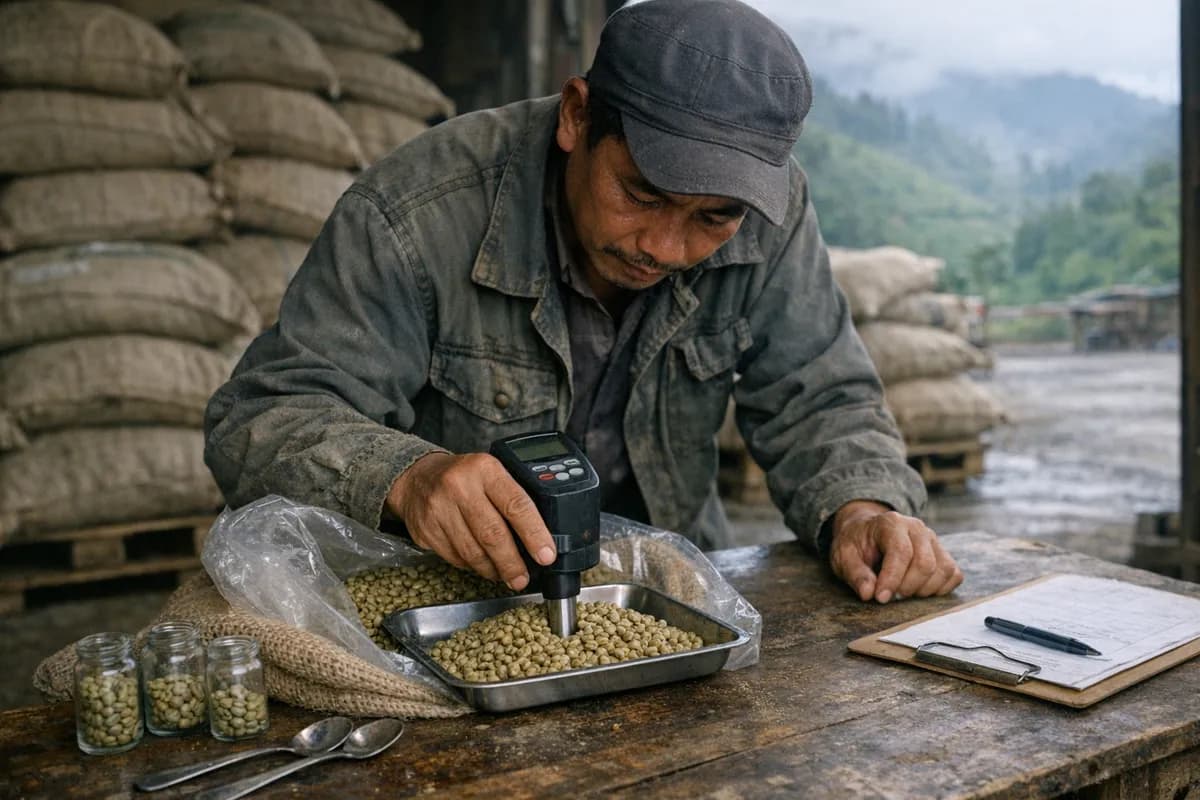
That moisture difference is not large on paper, but it matters in intake control. A roaster or importer with a strict warehouse limit should check the upper end of the contract range, not only the process name. We verify moisture by Sinar or oven on these arabica green lots. If your internal standard requires a tighter arrival band, state that in the buying brief before we quote.
Fully washed lots are often easier to place where the customer expects brightness, cup clarity, and repeatable medium roast behaviour. Ijen Java is usually the cleaner choice for espresso and moka profiles that need structure without the wet hulled signature. Kintamani Bali is the better starting point when the brief requires washed Bali arabica with Organic EU/NOP and Fairtrade availability.
Is wet hulled Indonesian coffee lower quality than washed?
Wet hulled Indonesian coffee is not automatically lower quality than washed coffee. Quality should be judged by defect grade, moisture, cup score, crop condition, and whether the process fits the intended roast and product.
Our published Grade 1 cup ranges show the point clearly. Gayo Sumatra wet hulled arabica scores 84 to 86 points under the SCA cupping protocol. Toraja Sulawesi wet hulled arabica scores 85 to 87 points. Ijen Java fully washed arabica scores 83 to 85 points. Kintamani Bali fully washed arabica scores 84 to 86 points.
Physical grade is a separate check. Indonesian National Standard SNI 01-2907 grades green coffee by defect value in a 300 g sample, with Grade 1 at 0 to 11, Grade 2 at 12 to 25, Grade 3 at 26 to 44, Grade 4a at 45 to 60, Grade 4b at 61 to 80, Grade 5 at 81 to 150, and Grade 6 at 151 to 225. We offer these arabicas from Grade 1 to 6, with Grade 1 as the default.
A washed Grade 1 and a wet hulled Grade 1 can both meet a professional buying standard, but they solve different cup problems. Wet hulled is not a substitute for washed when the brief asks for high clarity and crisp acidity. Washed is not a substitute for wet hulled when the customer expects the weight and character associated with Sumatra or Toraja.
Which Indonesian origins are wet hulled or washed?
For the arabica lots we supply, Gayo Sumatra and Toraja Sulawesi are wet hulled, while Ijen Java and Kintamani Bali are fully washed. The choice is usually process first, then origin, then certification and shipment timing.
| Origin lot | Process | Moisture | Grade 1 cup score | Screen | MOQ per grade | Lead time from contract |
|---|---|---|---|---|---|---|
| Gayo Sumatra Arabica | Wet hulled, patio and raised-bed dried | 11.0 to 12.5% | 84 to 86 | Screen 16 up, 90% retention | 19.2 MT | 3 to 4 weeks |
| Toraja Sulawesi Arabica | Wet hulled, shade and raised-bed dried | 11.0 to 12.5% | 85 to 87 | Screen 16 up, 90% retention | 19.2 MT | 4 to 5 weeks |
| Ijen Java Arabica | Fully washed, 18 hour ferment, mechanical drying finish | 10.5 to 12.0% | 83 to 85 | Screen 17 up, 90% retention | 19.2 MT | 3 to 4 weeks |
| Kintamani Bali Arabica | Fully washed, subak abian cooperative wet mills | 10.5 to 12.0% | 84 to 86 | Screen 16 up, 90% retention | 9.6 MT | 3 to 4 weeks |
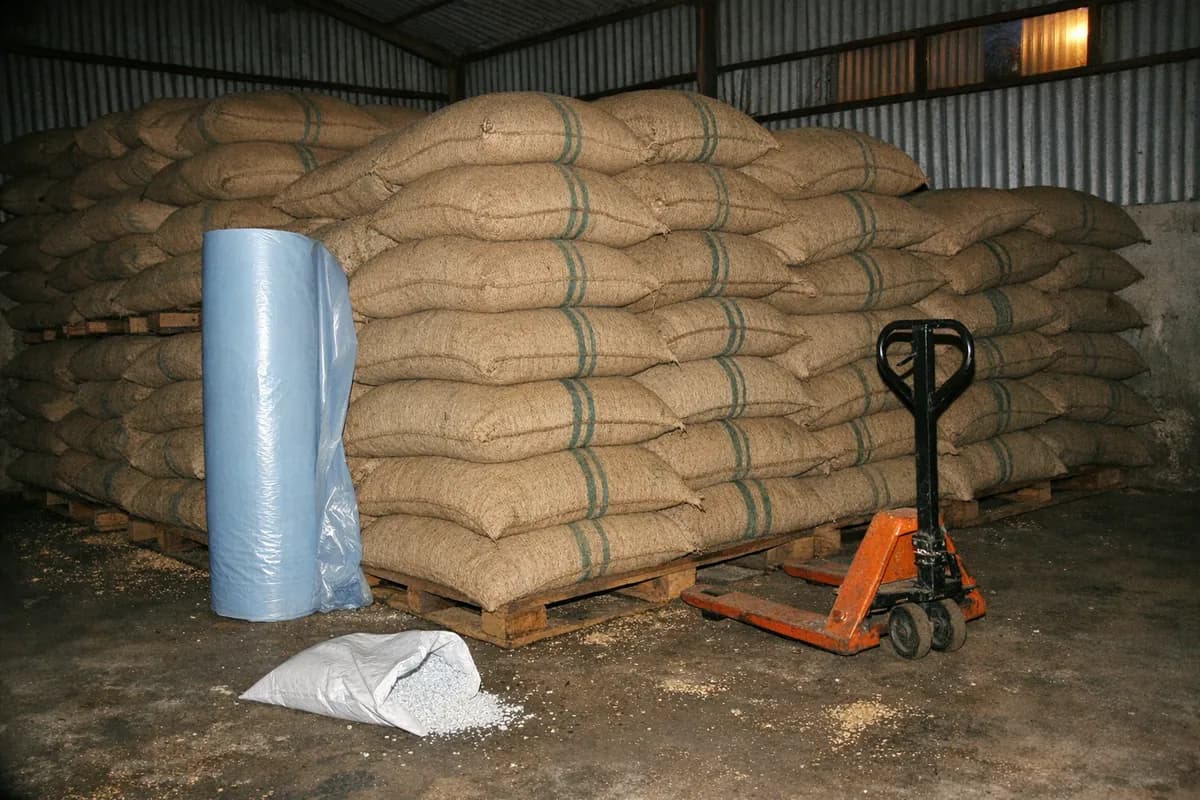
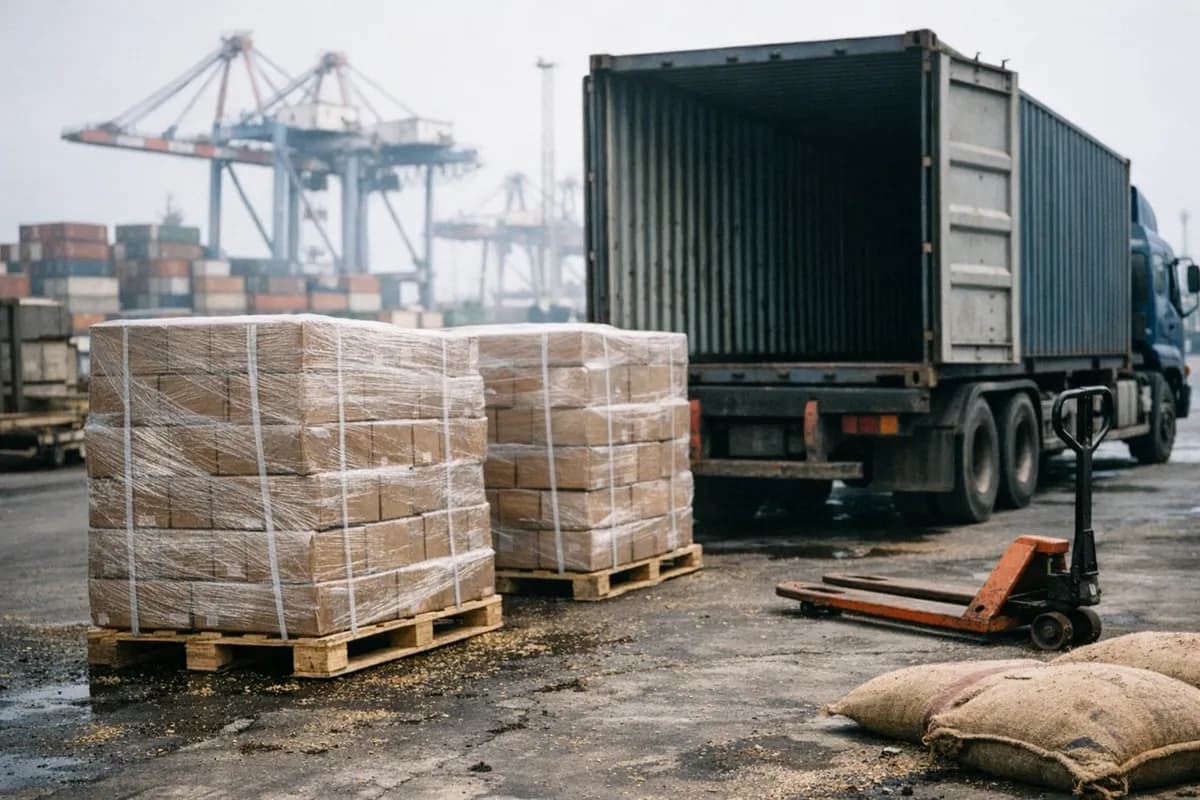
All four are current-crop green arabica lots packed in 60 kg jute bags with GrainPro liner. FOB, CFR, and CIF are available on these green coffee lines, and unroasted coffee ships under HS code 0901.11.
The table should be read as a procurement filter. If you need the highest published cup range in this set and can work with a 4 to 5 week lead time, Toraja Sulawesi Arabica Green Coffee Beans is the wet hulled lot to test. If you need fully washed Java with screen 17 up as the standard screen, Ijen Java Arabica Green Coffee Beans is the more direct specification.
Ask us for a current-crop sample set through the contact page if your team wants to cup wet hulled and washed Indonesian arabicas side by side.
How does wet hulling affect roast profile?
Wet hulled coffee usually needs a roast plan that respects its heavier body, different colour response, and higher specified green moisture range compared with our washed arabicas. We recommend testing by Agtron target and cup, not by copying the washed Java curve.
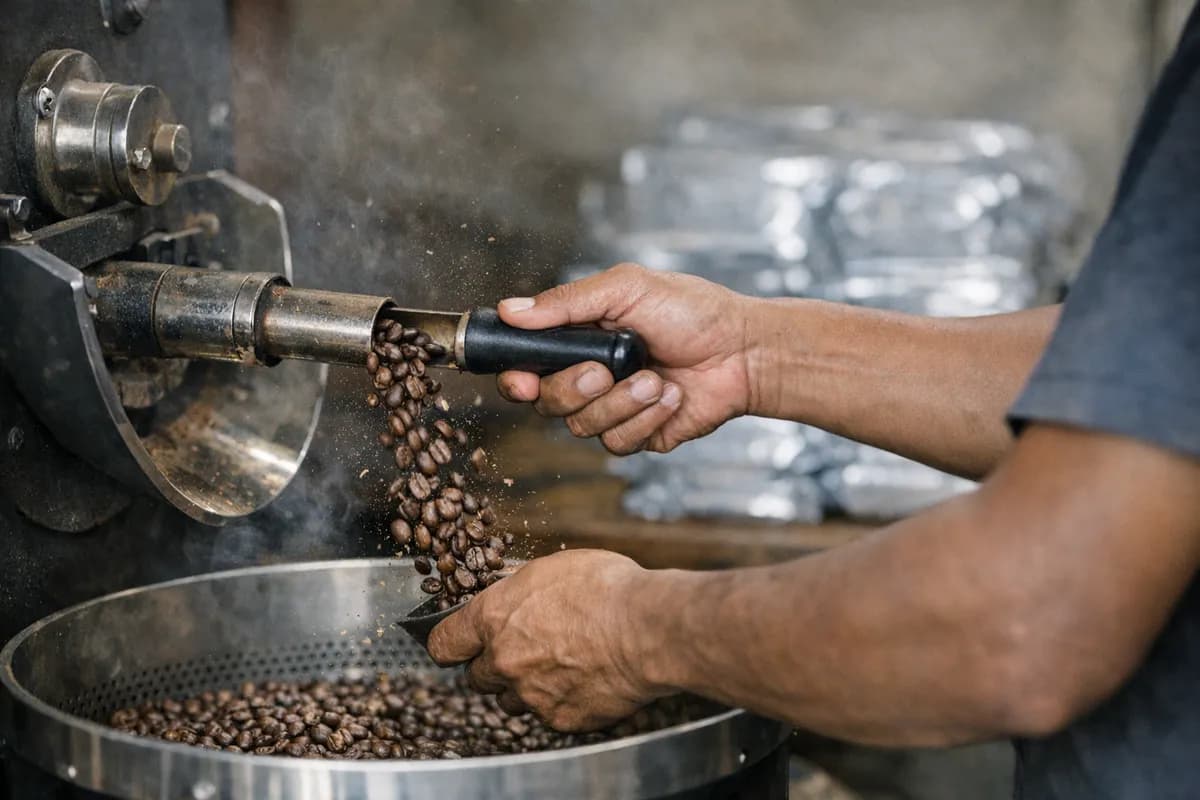
For roasted supply, our wet hulled Gayo can be roasted light to dark to your curve, with Agtron whole bean 40 to 62. Our wet hulled Toraja is roasted light to medium, with Agtron whole bean 56 to 65. The different ranges reflect typical use. Gayo can sit in darker espresso or milk-based formats. Toraja is better protected at lighter to medium development when the buyer wants the 85 to 87 point green to remain visible in filter or batch brew.
Washed lots have their own guardrails. Ijen Java roasted coffee is specified medium to medium dark, with Agtron whole bean 46 to 58. Kintamani Bali roasted coffee is specified light to medium, with Agtron whole bean 55 to 66. Those profiles suit cleaner washed cups where too much development can flatten acidity.
If you roast in your own plant, run the first trial with separate curves for wet hulled and washed coffee. Do not treat matching screen size as proof that heat transfer will match. Track charge temperature, rate of rise, first crack timing, development time ratio, colour, weight loss, and cup. The commercial decision should be based on the cup your customer will buy repeatedly, not on a generic origin description.
For buyers who want finished roasted coffee instead of green, our wholesale roasted Indonesian coffee range can be run to an agreed Agtron target and packed in one-way valve foil.
What are the MOQ and price drivers for wet hulled vs washed Indonesian coffee?
For green arabica, our MOQ is 19.2 MT per grade on Gayo Sumatra, Toraja Sulawesi, and Ijen Java, while Kintamani Bali starts at 9.6 MT per grade. Price depends on grade, screen request, process, origin, certification, packing, Incoterm, volume, crop timing, and freight.
We do not publish static prices in an article because arabica values move with the ICE Coffee C futures market, the origin differential, and shipment costs. A washed Kintamani lot with Organic EU/NOP and Fairtrade availability will not price the same way as a conventional washed Java or a wet hulled Sumatra. A screen 18 up request on a wet hulled lot can also change availability and cost compared with the standard screen.
Incoterm affects the number in the quotation. FOB leaves ocean freight and insurance to the buyer after loading. CFR includes freight to the named destination port. CIF includes freight and insurance to the named destination port. Give us the destination port, preferred Incoterm, grade, target screen, and shipment month so the quote is built on the same assumptions your procurement file uses.
Choose wet hulled Gayo or Toraja when the product brief needs Indonesian body, lower perceived acidity, and a process identity customers recognize. Choose fully washed Ijen Java when roast consistency and a cleaner profile are the priority. Choose Kintamani Bali when you need washed Bali arabica with Organic EU/NOP and Fairtrade options, plus a lower green MOQ than the larger island lots. Send that intended use through our contact page, and we will quote the process and origin that fit the job.