Indonesian Private Label Roasted Coffee Manufacturing
Evaluate a private label coffee manufacturer Indonesia option by Agtron target, MOQ, valve-bag format, artwork gate, and Halal availability.
By Bayu PrasetyoHead of Green Coffee TradingQ Grader (Coffee Quality Institute) with nine years buying, cupping, and contracting Indonesian arabica and robusta for roasters in Europe, Japan, and the Gulf.
Private label roasted coffee sourcing in Indonesia should start with the same discipline as green coffee contracting: define the coffee, the roast target, the pack, the certification requirement, the Incoterm, and the approval steps before production starts.
We write this from the export desk. Buyers usually come to us with one of two briefs: a retail pack for supermarket or ecommerce, or a horeca and manufacturing pack for cafés, hotels, vending, espresso blends, or repacking. Both can work, but the order has to be specified by roast profile and grade, not only by brand name.
Our wholesale roasted Indonesian coffee range is built from Indonesian arabica and robusta lots roasted to agreed profiles, packed in one-way valve foil, and shipped under export documentation. For private label programmes, the practical work is matching the cup and colour your market already sells, then fixing the pack format and artwork approval before the roast slot is planned.
What should an Indonesian private label coffee brief include?
A private label coffee brief should state the origin, species, green grade, roast target, grind, pack size, order volume, Incoterm, destination, certification requirement, and artwork status. If the brief only says “dark roast espresso” or “retail arabica,” the offer will be too loose for procurement approval.
For arabica, buyers normally choose between wet hulled, washed, or natural dried Indonesian profiles. Gayo Sumatra and Toraja Sulawesi are wet hulled coffees. Ijen Java and Kintamani Bali are washed. Bajawa Flores is natural dried. Those processing methods change how the coffee behaves in roast development, colour, aroma, and extraction.
For robusta, the brief usually focuses on body, caffeine range, crema, roast colour, and cost position. Lampung, Java, Bali, Flores, and Sulawesi robusta lines are available as roasted coffee, with different Agtron ranges and minimums. A vending blend or soluble ingredient brief is not the same as a café espresso blend brief, even when both use robusta.
The contract line should also name the green grade. Our roasted products are based on green coffee graded under SNI 01-2907, with Grade 1 as the default on arabica lines and grade options across robusta lines. Roasted coffee is not a way to hide an undefined green specification. A buyer who wants repeatability should approve the roast sample and the input grade together.
If you are still building the buying brief, start with our private label coffee roasting collection and shortlist only the origins that fit your market format.
What is the minimum order for private label coffee in Indonesia?
Our minimum order depends on the roasted origin, roast profile, and green grade. The lowest roasted MOQ is 300 kg per roast profile and grade on Bajawa Flores Arabica, most roasted arabica and selected island robusta lines start at 500 kg, and some volume robusta lines start at 1,000 kg.
That MOQ is per roast profile and grade. If you need the same coffee in two roast colours, treat them as two production lines. If you need one arabica and one robusta for a blend, each component has to meet its own minimum unless we quote a finished blend as one agreed formula.
The 500 kg group includes Gayo Sumatra Arabica, Ijen Java Arabica, Kintamani Bali Arabica, Pupuan Bali Robusta, Manggarai Flores Robusta, and Toraja Sulawesi Arabica. The 1,000 kg group includes Lampung Sumatra Robusta, Java Robusta, and Kolaka Sulawesi Robusta. Bajawa Flores Arabica is the 300 kg line.
Price is driven by green grade, origin, species, roast loss, pack format, certification, Incoterm, volume, and crop season. Arabica input pricing normally references the ICE Coffee C futures market plus or minus an origin differential. Robusta input pricing normally references the ICE London Robusta futures market plus or minus an origin differential. We do not quote spot prices in static articles because futures, freight, and differentials move.
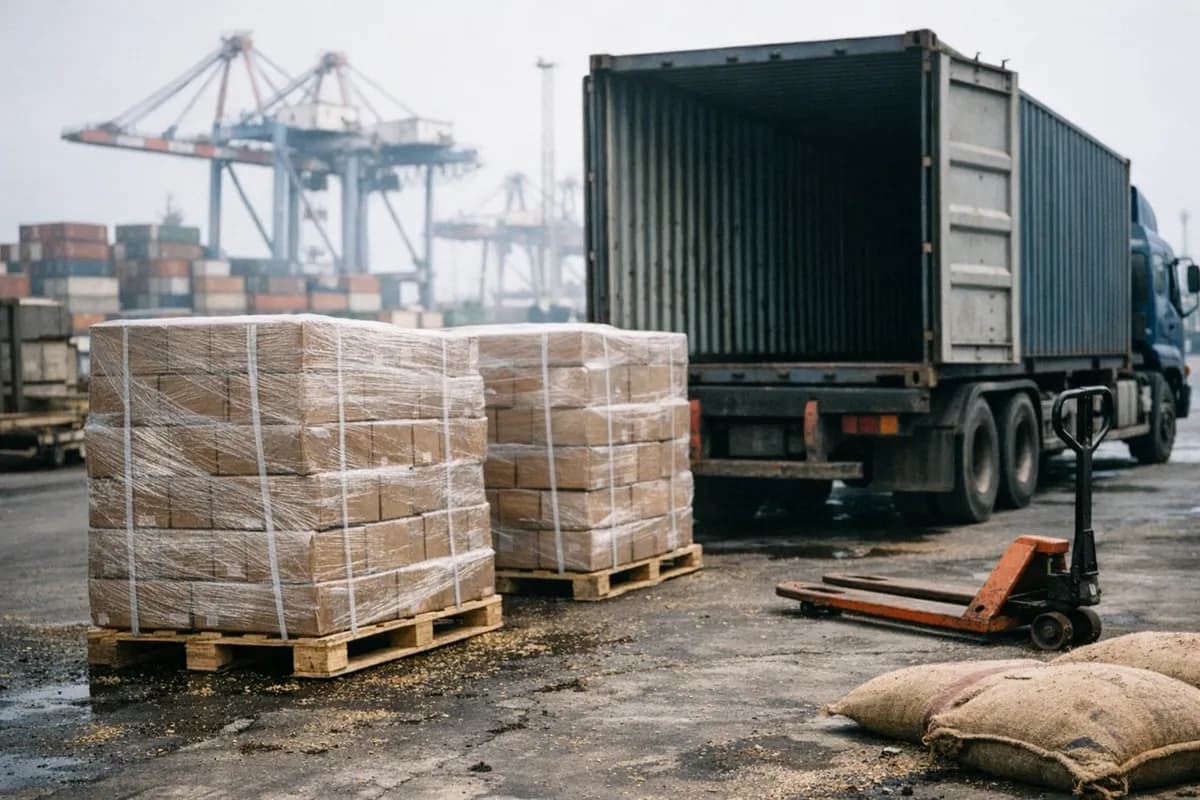
Incoterm changes the quote. FOB suits buyers who control freight from Indonesia. CIF includes freight and insurance to the named destination port. DAP is used when the buyer wants delivery to a named place under the agreed route. Send your target origin, roast profile, pack size, volume, and destination through our contact page for a current quotation.
Can an Indonesian manufacturer match a house roast profile?
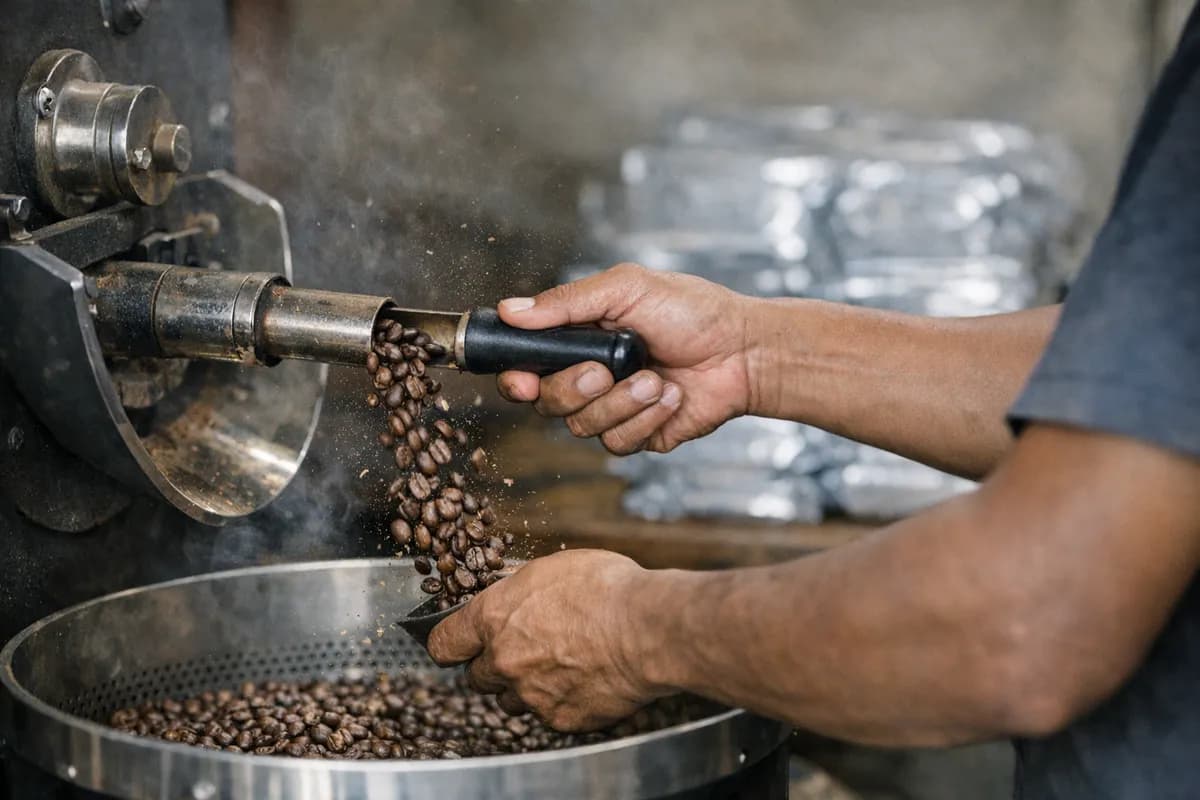
Yes, we can roast to an agreed curve within the Agtron range published for each roasted coffee line. The buyer should send a reference sample or target specification, then approve the matched sample before production.
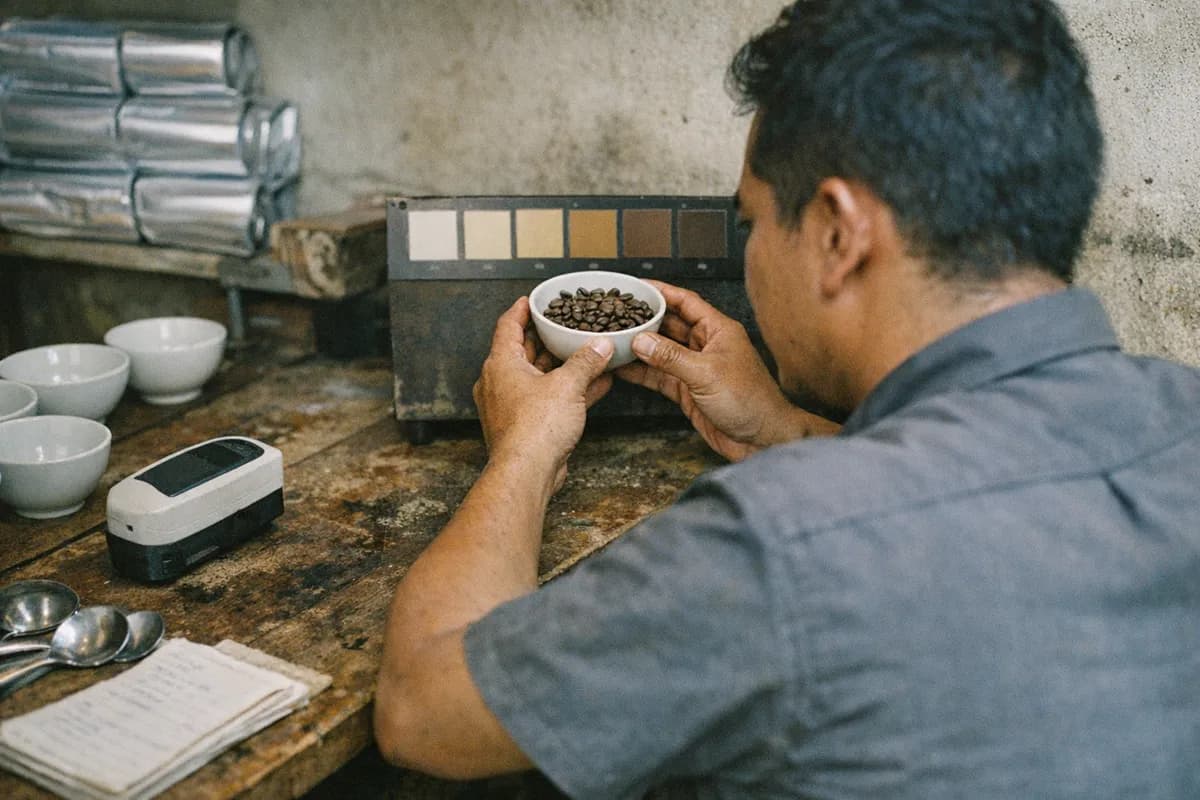
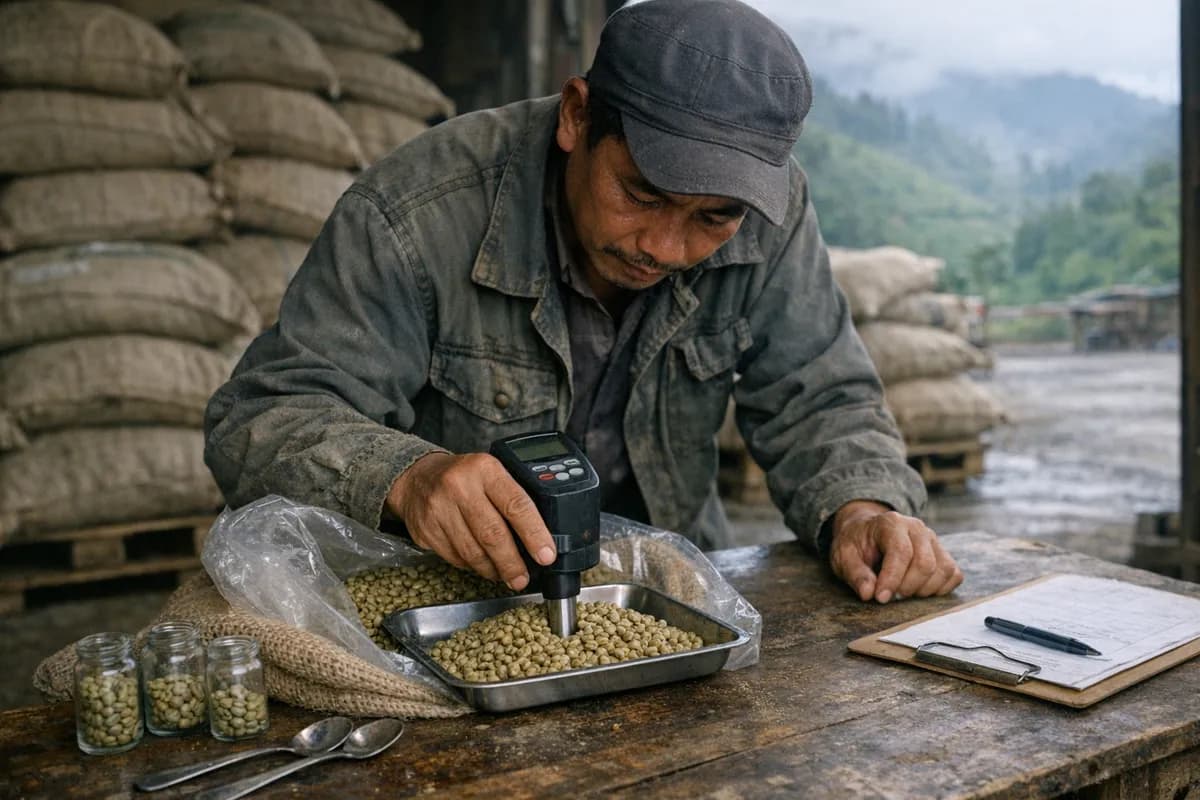
Agtron should be written as a target, not as a vague roast name. “Medium” can mean different things in different markets. An Agtron whole-bean value gives the buyer, roaster, and QC team a measurable colour reference.
Our Gayo Sumatra Arabica can be roasted from light to dark within Agtron whole bean 40 to 62, which makes it suitable when a buyer wants a broad range from filter to deeper espresso positioning. Buyers looking for this profile can review Gayo Sumatra Arabica Roasted Coffee before requesting samples.
Coffee in this article
Gayo Sumatra Arabica Roasted Coffee
Wet hulled Sumatran arabica roasted to your curve between Agtron 40 and 62, on any grade of green.
Rainforest Alliance · ISO 22000 · Halal (BPJPH)
View specificationsWashed Kintamani Bali Arabica is lighter, specified at Agtron 55 to 66, while natural Bajawa Flores Arabica is specified at Agtron 58 to 68. Those ranges suit retail and filter programmes where the buyer wants the origin character to remain visible. Lampung Robusta is darker at Agtron 36 to 48, and Kolaka Sulawesi Robusta is also dark at Agtron 36 to 46, which fits espresso crema, vending, and stronger horeca applications.
Grind should be specified after roast approval. Our roasted lines can ship whole bean, and selected products can be ground for filter, moka, espresso, vending, cupping, pour-over, or traditional kopi tubruk, depending on the origin. Grind setting affects oxygen exposure and extraction, so we prefer to confirm the brewing method before packing.
What pack sizes are available for private label coffee?
Pack availability depends on the roasted origin. Retail-oriented lines include 250 g and 1 kg valve bags on selected Bali, Flores, and Toraja coffees, while horeca and manufacturing formats include 1 kg valve bags, 5 kg foil bags, or 10 kg bulk foil on selected origins.
For retail, 250 g valve bags are available on Kintamani Bali Arabica, Pupuan Bali Robusta, Bajawa Flores Arabica, and Toraja Sulawesi Arabica. These lines also support 1 kg valve bags in 12 kg cartons. A 250 g bag suits supermarket shelves, ecommerce bundles, and tasting ranges where the consumer buys by origin.
For horeca, 1 kg valve bags in 12 kg cartons are the common format across many roasted lines. Cafés and hotels can use 1 kg bags without opening a large bulk pack that may sit exposed. If a buyer needs stronger espresso or vending coffee, robusta lines such as Lampung, Java, and Kolaka can be quoted in 1 kg valve bags, with 10 kg bulk foil available on those selected lines.
For repacking or manufacturing, 5 kg foil bags are available on Gayo Sumatra Arabica and Ijen Java Arabica. Bulk foil reduces unit packaging work compared with retail bags, but it also shifts more handling responsibility to the buyer after opening.
Roasted coffee across our listed lines has 2.0 to 3.0% moisture after roast and a 12 month shelf life in unopened one-way valve foil. The export HS code for roasted coffee is 0901.21. If your intake team requires a specific carton marking, pallet instruction, or barcode format, include it before the artwork file is released.
How long does private label artwork take?
Artwork should be treated as a pre-production gate before the roasted coffee lead time starts. Our roasted coffee lead times run from 2 to 4 weeks by origin, with dispatch within 7 days of roast, but artwork correction and buyer approval must be completed before the production file is fixed.
We do not publish one fixed artwork lead time because the work depends on the file status and the destination market. A print-ready file with approved language, barcode, net weight, importer details, storage statement, origin wording, and certification logo permission moves faster than a concept file that still needs regulatory review.
The buyer should decide early whether the bag is for retail sale, horeca use, or repacking. Retail packs need more label discipline because the final consumer sees the bag. Horeca cartons may need batch codes and carton marks more than shelf-facing design. Certification marks need extra care. If a product is sold as Organic, Fairtrade, Rainforest Alliance, 4C, or Halal, the right certificate and logo permission must match the specific coffee line.
The clean sequence is simple: approve the coffee sample, approve the pack size, approve the artwork, then lock the roast schedule. If artwork is still changing after the roast slot is planned, the risk is not the roast. The risk is finished coffee waiting for packaging release.
Is Halal certification available on roasted coffee?
Yes, Halal certification is available on selected roasted coffee lines, but not every roasted origin carries the same certification set. Buyers should state the Halal requirement at enquiry stage so we quote a line that carries Halal BPJPH.
Halal BPJPH is available on Gayo Sumatra Arabica Roasted Coffee, Lampung Sumatra Robusta Roasted Coffee, Pupuan Bali Robusta Roasted Coffee, Bajawa Flores Arabica Roasted Coffee, Manggarai Flores Robusta Roasted Coffee, Toraja Sulawesi Arabica Roasted Coffee, and Kolaka Sulawesi Robusta Roasted Coffee. Some other roasted lines carry different certifications, such as Organic, Fairtrade, Rainforest Alliance, 4C, or ISO 22000, depending on origin.
Do not add a certification logo to artwork until the coffee line and document basis are confirmed. A common procurement mistake is designing one master bag and assuming every origin can carry the same marks. That is not how certified supply works. The purchase order, artwork, certificate reference, and shipment documents should all refer to the same coffee.
For most buyers, the right supplier is the one that can turn a brand brief into a controlled production line: one origin or blend, one Agtron target, one approved pack, one document set, and a repeatable order quantity. If you have those fields ready, send them through our contact page and we will quote the current roasted options that fit the brief.