How to Buy Indonesian Green Coffee Beans by Spec
Learn how to buy green coffee beans from Indonesia by turning a supplier offer into a checked specification before contract and shipment.
By Bayu PrasetyoHead of Green Coffee TradingQ Grader (Coffee Quality Institute) with nine years buying, cupping, and contracting Indonesian arabica and robusta for roasters in Europe, Japan, and the Gulf.
Buying Indonesian green coffee starts with a written specification. Origin names help, but a purchase decision should be based on species, grade, screen, moisture, process, packing, sample approval, Incoterm, and shipment timing.
We write this from the export desk. Our job is to turn a buying brief into a coffee line that can be sampled, contracted, checked before shipment, and documented for import. If you are comparing suppliers, ask for the exact coffee that can be shipped against your quality and logistics requirements.
What green coffee can be bought from Indonesia?
Indonesia can supply arabica and robusta green coffee from several islands, and the right choice depends on your end use. We offer unroasted lots from Sumatra, Java, Bali, Flores, and Sulawesi through our Indonesian green coffee beans range.
For arabica, the first filter is process. Gayo Sumatra and Toraja Sulawesi are wet hulled coffees, known locally as giling basah. Ijen Java and Kintamani Bali are fully washed. Bajawa Flores is natural dried on raised beds. Those process choices affect roasting behaviour, cup profile, moisture management, and how the coffee should be described in a contract.
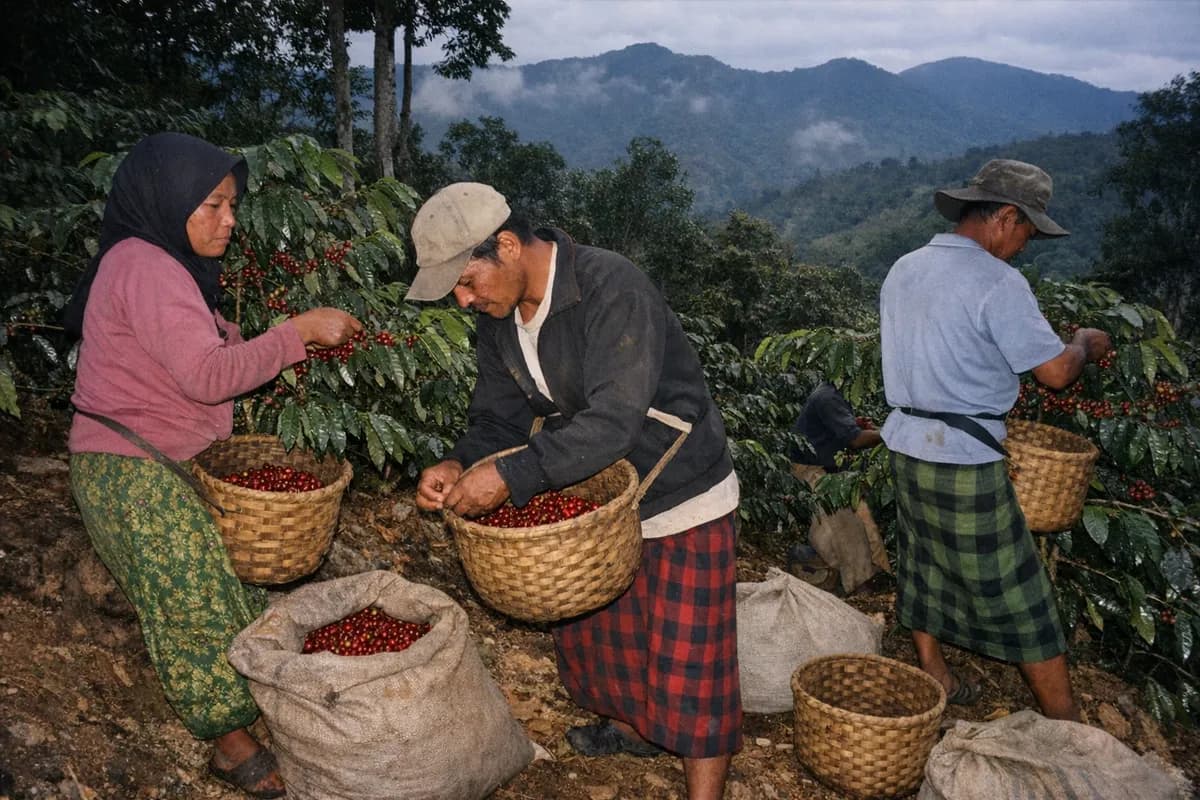
For robusta, buyers usually start with function. Soluble manufacturers often work from grade, screen, caffeine, and extraction performance. Espresso blenders may look for crema, body, roast colour behaviour, and defect tolerance. Our robusta range includes Lampung, Java, Bali, Flores, and Sulawesi origins, with grades available across the SNI ladder. Buyers comparing extraction or blend components can start with our Indonesian robusta coffee beans page.
If your target is wet hulled arabica, review Gayo Sumatra Arabica Green Coffee Beans as a reference line before asking for samples. It gives a practical example of how origin, process, grade, screen, moisture, packing, and shipment terms should be fixed before contract.
Coffee in this article
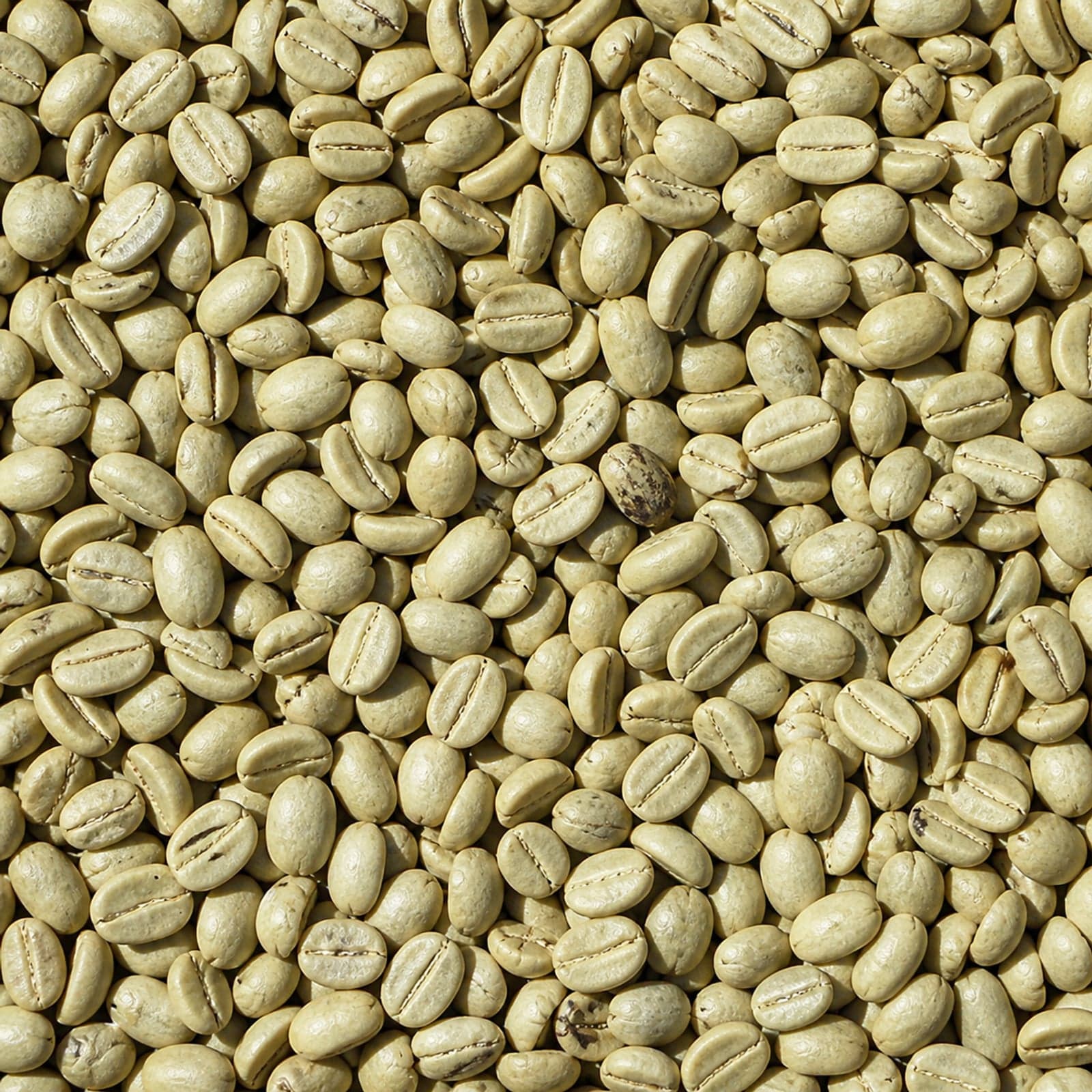
Gayo Sumatra Arabica Green Coffee Beans
Wet hulled arabica from the Gayo and Lintong highlands, offered from Grade 1 through Grade 6 on the same coffee.
Rainforest Alliance · ISO 22000 · Halal (BPJPH)
View specificationsHow should Indonesian green coffee be specified?
Specify Indonesian green coffee by species, origin, process, SNI grade, screen size, moisture, crop, packing, certification requirement, quantity, Incoterm, destination port, and shipment month. A quote that leaves out one of those fields may not be comparable with another supplier’s quote.
A complete specification line for one coffee can look like this: Gayo Sumatra Arabica Green Coffee Beans from the Gayo highlands and Lintong area at 1,100 to 1,600 m asl, wet hulled (giling basah), patio and raised-bed dried, Grade 1 by default with Grade 1 to 6 available under SNI 01-2907, screen 16 up with 90% retention or screen 18 up on request, 11.0 to 12.5% moisture verified by Sinar or oven, 84 to 86 points on Grade 1 under SCA cupping protocol, current crop with main harvest October to February, packed in 60 kg jute bags with GrainPro liner, MOQ 19.2 MT or 320 bags per grade, lead time 3 to 4 weeks from contract, available with Rainforest Alliance, ISO 22000, and Halal BPJPH, shipped under FOB, CFR, or CIF, HS code 0901.11.
That level of detail removes room for argument. “Sumatra arabica” is not enough for procurement approval. “Wet hulled Gayo Sumatra arabica, SNI Grade 1, screen 16 up, 11.0 to 12.5% moisture, 60 kg jute with GrainPro, FOB Indonesia” is a line a buyer, quality manager, freight forwarder, and customs broker can read the same way.
Indonesian National Standard SNI 01-2907 grades green coffee by defect value in a 300 g sample, with Grade 1 at 0 to 11, Grade 2 at 12 to 25, Grade 3 at 26 to 44, Grade 4a at 45 to 60, Grade 4b at 61 to 80, Grade 5 at 81 to 150, and Grade 6 at 151 to 225. If your factory can accept Grade 4a or 4b for extraction, state that. If your retail programme needs Grade 1 only, state that too.
Send us your intended use, target origin, grade, and destination port through our contact page if you want us to prepare a current offer against a fixed buying brief.
What MOQ do Indonesian green coffee suppliers require, and how is price built?
Our standard MOQ for most Indonesian green coffee is 19.2 MT per grade, equal to 320 bags of 60 kg in one 20 ft FCL. Bali and Flores green lots start from 9.6 MT per grade, equal to 160 bags.
The MOQ is per grade. If you request Grade 1 and Grade 4a, treat them as two separate contract lines because the lots are prepared, sampled, priced, and documented separately. If you need multiple shipment months, give that schedule before contract so allocation can be planned against crop availability.
Price is built from species, origin, grade, screen, certification, packing, crop timing, quantity, Incoterm, and freight. Arabica offers are commonly referenced against the ICE Coffee C futures market plus or minus an origin differential. Robusta offers are commonly referenced against the ICE London Robusta futures market plus or minus an origin differential. We do not publish spot or terminal prices in articles because those numbers move and would be stale by the time a buyer reads them.
Incoterm changes the quoted number. FOB leaves the buyer to control ocean freight and insurance after loading. CFR includes freight to the named destination port. CIF includes freight and insurance to the named destination port. If your purchasing team compares quotes, compare the same Incoterm and the same port.
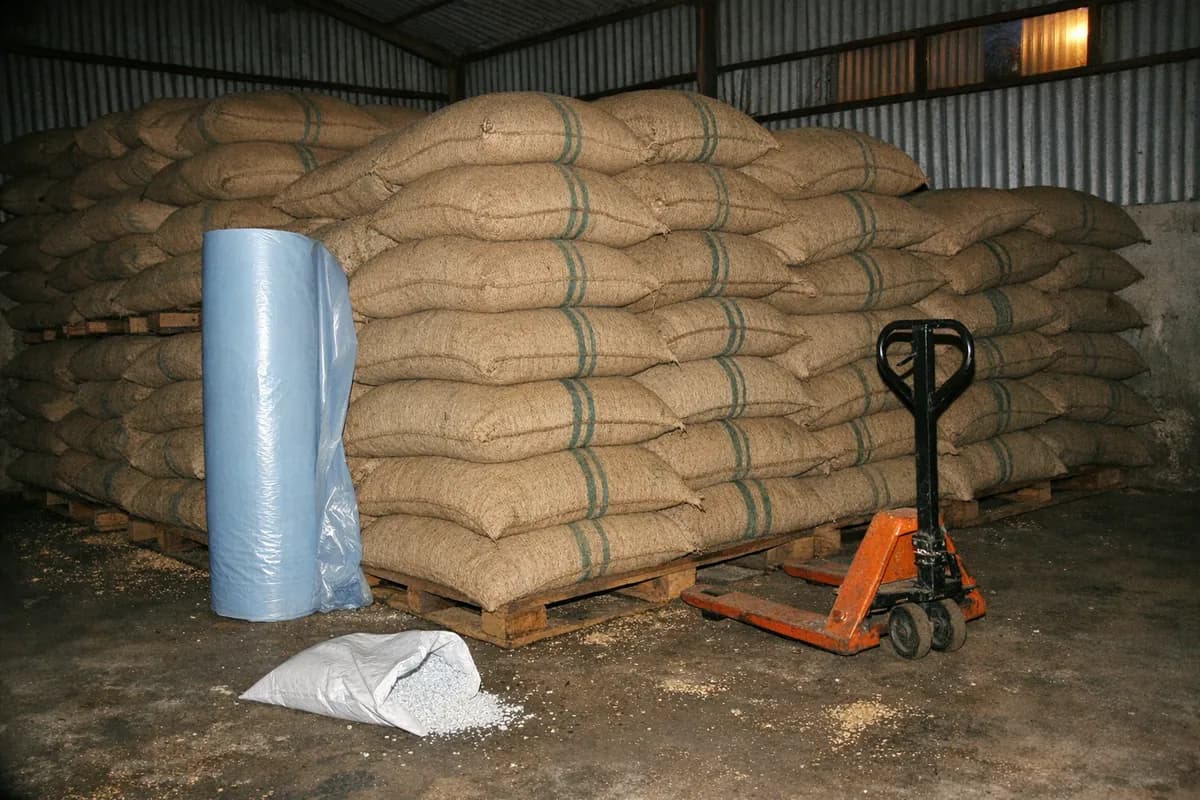
Packing should also be part of the price discussion. Our arabica green lots use 60 kg jute bags with GrainPro liner. Our robusta green lots use 60 kg jute bags with a container liner and desiccant. Those formats are not interchangeable assumptions, so write the required packing into the purchase order.
How do coffee samples work before a contract?
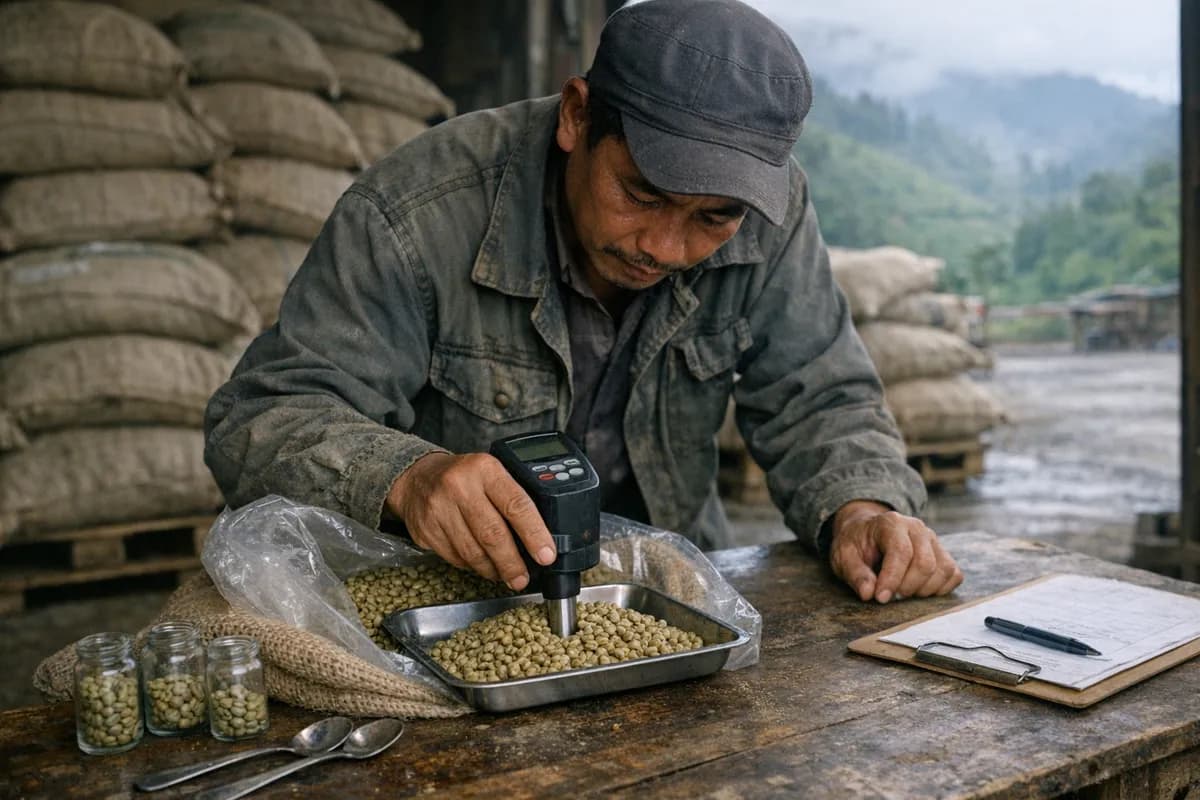
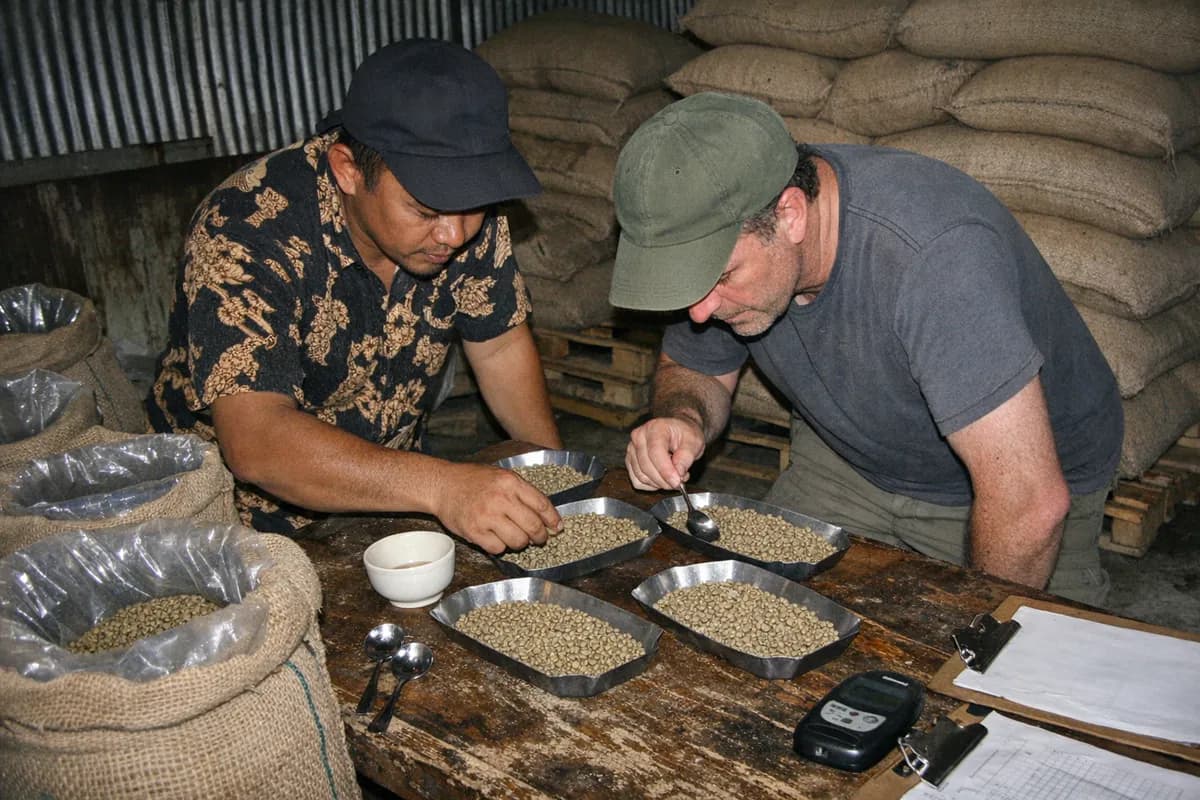
Samples should prove that the offered coffee matches the specification you intend to buy. Use samples to check appearance, odour, screen, moisture, defects, roast behaviour, and cup before you approve a contract line.
Start with a clear request. A useful sample request names the species, origin, grade, process, screen where relevant, certification requirement, intended use, first shipment size, and destination port. If the request is broad, the sample may be interesting but not contractable.
Evaluate the sample against your own intake standard. For arabica, cup the coffee using your internal protocol or the SCA cupping protocol if that is how your programme scores lots. For robusta, many industrial buyers roast or extract the sample, then compare body, bitterness, caffeine range, defect impact, and extraction yield against their plant requirement.
After approval, the sample reference must be tied to a written contract. Do not approve “Indonesia robusta” as a general category. Approve the specific origin, grade, screen, moisture range, packing, shipment period, and Incoterm. For repeat supply, keep a retained reference sample so the pre-shipment sample and arrival sample can be checked against the same agreed standard.
If your team is still choosing between wet hulled, washed, and natural arabica, ask for a short sample set rather than a broad catalogue. We can align the request to the green coffees listed on our coffees page.
What should I put in a green coffee purchase order?
A green coffee purchase order should state the coffee identity, quality specification, quantity, packing, price basis, Incoterm, shipment period, payment terms, and document requirements. The purchase order should match the approved sample and supplier contract.
Write the coffee line in operational language. Include species, origin, process, SNI grade, screen size where applicable, moisture limit or range, crop, certification if required, and bag format. Include the total net weight, number of bags, and whether the order is one grade or split into separate grades.
The commercial section should state price, currency, Incoterm, named port, shipment window, payment terms, and who controls freight. “CIF Europe” is not precise enough. “CIF Rotterdam” or “FOB Surabaya” gives both sides a workable instruction.
The document section should be agreed before loading. A normal import file may include commercial invoice, packing list, bill of lading, certificate of origin if required, and phytosanitary documents if required by the destination country. Your customs broker should confirm the final document set for your market. For a wider import workflow, our guide on how to import Indonesian green coffee beans covers the steps beyond supplier selection.
How long is lead time and which Incoterms are available?
Lead time for our Indonesian green coffee ranges from 2 to 5 weeks from contract, depending on origin and preparation. Our green coffee Incoterms are FOB, CFR, and CIF.
Lampung Sumatra robusta and Java robusta are listed at 2 to 3 weeks from contract. Gayo Sumatra arabica, Ijen Java arabica, Kintamani Bali arabica, Pupuan Bali robusta, and Kolaka Sulawesi robusta are listed at 3 to 4 weeks. Bajawa Flores arabica, Flores Manggarai robusta, and Toraja Sulawesi arabica are listed at 4 to 5 weeks.
Those timings begin from contract, not from the first enquiry. A quote request, sample dispatch, sample evaluation, internal approval, and contract negotiation all sit before the production clock. If your vessel deadline is fixed, share the required shipment month at the first enquiry.
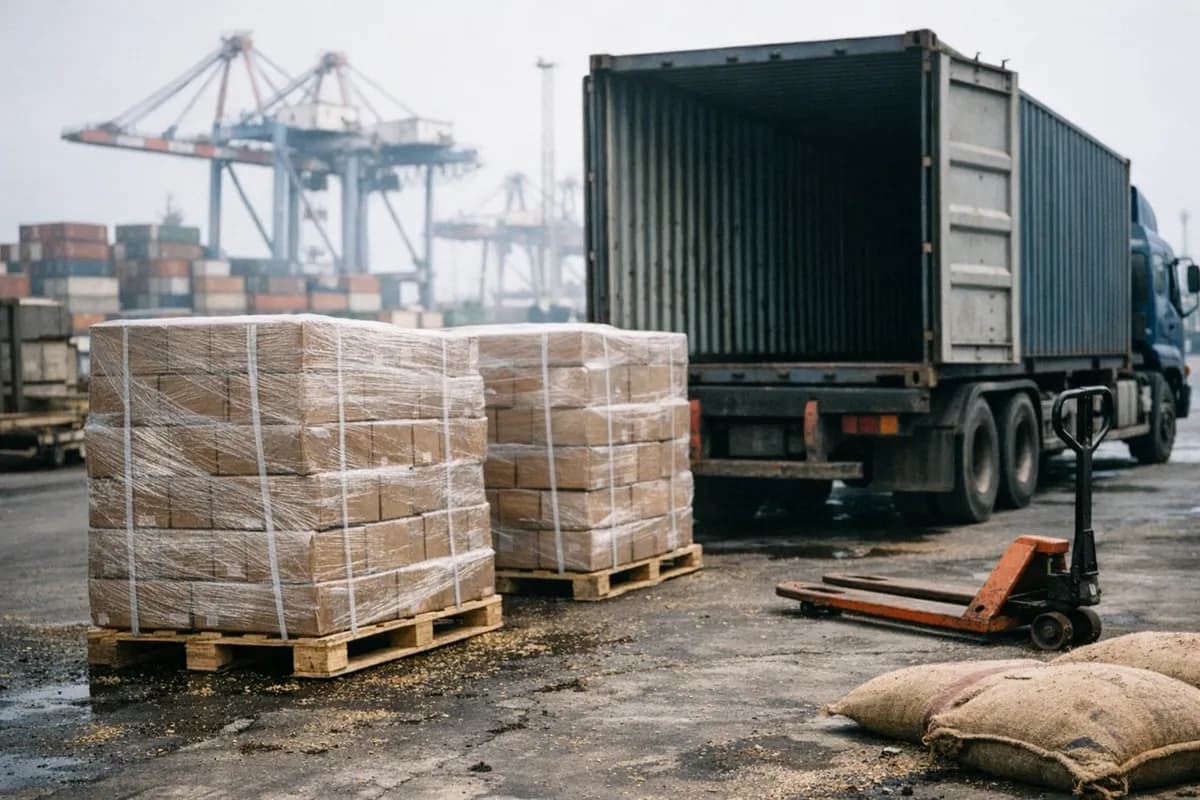
Before the container leaves Indonesia, check four items: the contracted specification, the approved sample reference, the packing format, and the document list. Most shipment problems start when one of those points is assumed instead of written.
A disciplined buying process is simple. Define the coffee, sample the contractable lot, approve against a measurable standard, issue a purchase order that matches the offer, then confirm pre-shipment controls before loading. If you have a target origin and shipment month ready, send the details through our contact page and we will quote against the specification.