How to Import Indonesian Green Coffee Beans
Learn how to import Indonesian green coffee beans with a practical buyer workflow from contract specs to export shipment checks.
By Bayu PrasetyoHead of Green Coffee TradingQ Grader (Coffee Quality Institute) with nine years buying, cupping, and contracting Indonesian arabica and robusta for roasters in Europe, Japan, and the Gulf.
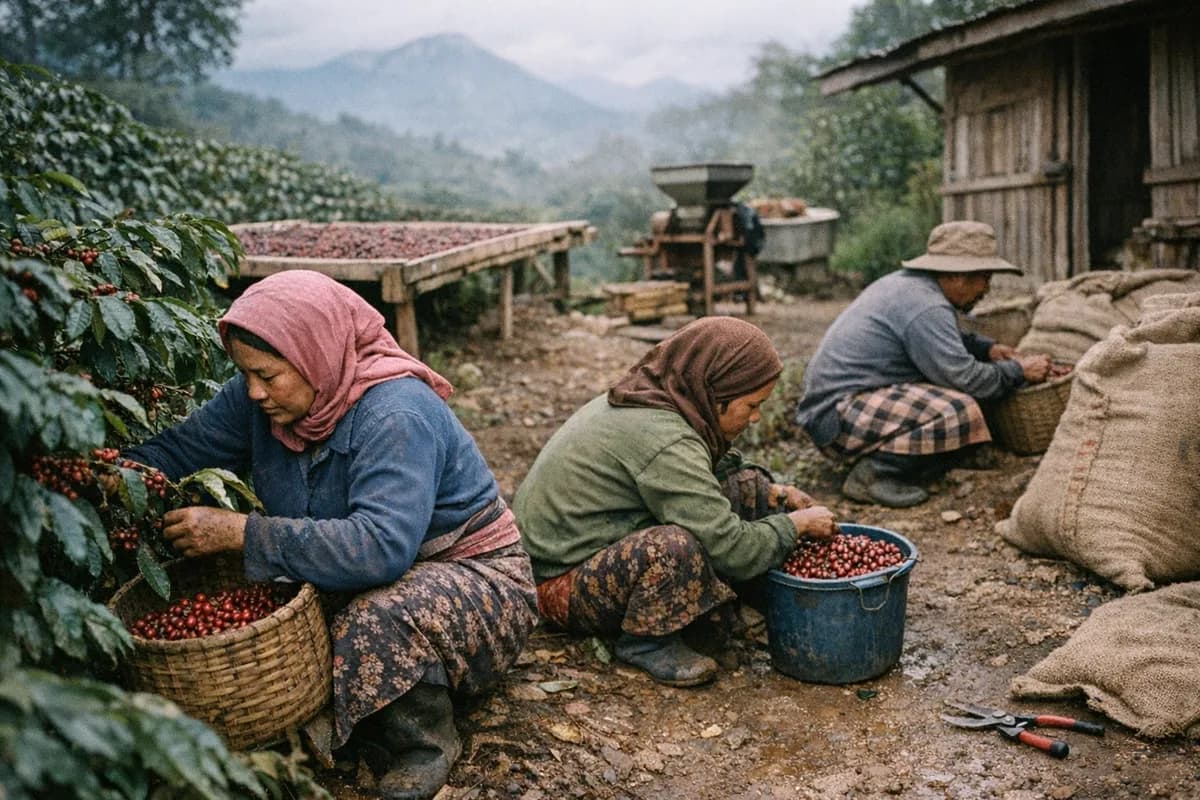
Importing green coffee from Indonesia is a contract discipline before it is a logistics job. The main decisions are origin, species, grade, screen, moisture, packing, Incoterm, shipment timing, and the documents your customs broker needs before the container arrives.
We write this from the export desk. Our role is to turn a buying brief into a coffee line that can be sampled, contracted, packed, and shipped under a clean document set. If you are comparing Indonesian suppliers, the useful question is not “what is available?” It is “what exact coffee can be shipped against my specification, in my volume, under my preferred Incoterm?”
What green coffee can be imported from Indonesia?
Indonesia can supply both arabica and robusta green coffee, with different cup profiles, processing methods, crop windows, and contract uses. We offer unroasted Indonesian coffee from Sumatra, Java, Bali, Flores, and Sulawesi through our Indonesian green coffee beans range.
For arabica buyers, the main choice is process and origin. Gayo and Toraja are wet hulled coffees, known locally as giling basah. Ijen Java and Kintamani Bali are fully washed. Bajawa Flores is natural dried. These are not cosmetic differences. A wet hulled lot behaves differently in roasting and quality control than a washed Java or a natural Flores. Buyers using Indonesian arabica for single-origin retail programmes usually start with the Indonesian Arabica Coffee Beans page, then narrow by island.
For robusta buyers, the decision is usually functional. Soluble plants, espresso blenders, and volume roasters often specify caffeine range, screen, grade, and cup neutrality before they discuss origin. Lampung is the large commercial reference point in Indonesian robusta, while Java, Bali, Flores, and Sulawesi offer different caffeine bands and preparation styles. Our Indonesian Robusta Coffee Beans page groups those options by origin and grade.
A buyer importing for the first time should not start with ten origins. Pick one commercial use case. For example, a roaster needing a wet hulled arabica component might review Gayo Sumatra Arabica Green Coffee Beans. A soluble manufacturer may begin with Lampung or another robusta line, then compare Grade 1 against lower grades after sample approval.
Coffee in this article
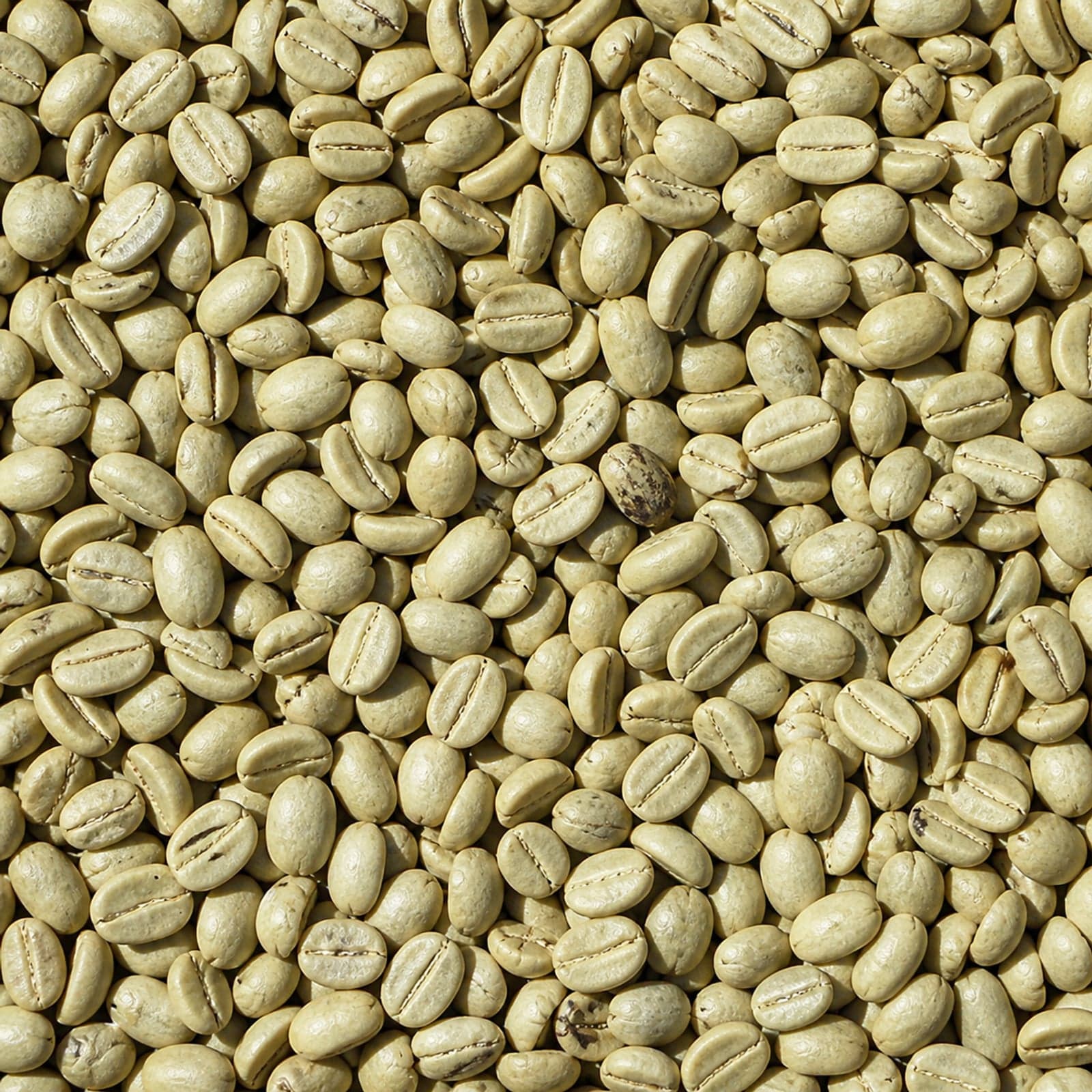
Gayo Sumatra Arabica Green Coffee Beans
Wet hulled arabica from the Gayo and Lintong highlands, offered from Grade 1 through Grade 6 on the same coffee.
Rainforest Alliance · ISO 22000 · Halal (BPJPH)
View specificationsHow should a buyer specify Indonesian green coffee?
A buyer should specify Indonesian green coffee by species, origin, process, SNI grade, screen size, moisture, packing, crop, certification requirement, Incoterm, destination port, and required shipment month. If any one of those fields is missing, the offer can look cheaper while carrying a different risk.
A complete contract line might read like this for one coffee: Gayo Sumatra Arabica Green Coffee Beans, grown at 1,100 to 1,600 m asl in the Gayo highlands and Lintong area of Sumatra, wet hulled (giling basah), patio and raised-bed dried, Grade 1 by default with Grade 1 to 6 available under SNI 01-2907, screen 16 up with 90% retention or screen 18 up on request, 11.0 to 12.5% moisture verified by Sinar or oven, 84 to 86 points on Grade 1 under SCA cupping protocol, current crop with main harvest October to February, packed in 60 kg jute bags with GrainPro liner, MOQ 19.2 MT or 320 bags per grade, lead time 3 to 4 weeks from contract, available with Rainforest Alliance, ISO 22000, and Halal BPJPH, shipped under FOB, CFR, or CIF, HS code 0901.11.
That level of detail prevents later disputes. “Sumatra arabica Grade 1” is not enough for a procurement file because it does not state screen, moisture, crop, packing, or Incoterm. “Wet hulled Sumatra arabica, SNI Grade 1, screen 16 up, 11.0 to 12.5% moisture, 60 kg jute with GrainPro, FOB Indonesia” is a line that a supplier, quality manager, freight forwarder, and customs broker can all read the same way.
SNI grading should also be treated as a measurable field, not a label. Indonesian National Standard SNI 01-2907 grades green coffee by defect value in a 300 g sample, with Grade 1 at 0 to 11, Grade 2 at 12 to 25, Grade 3 at 26 to 44, Grade 4a at 45 to 60, Grade 4b at 61 to 80, Grade 5 at 81 to 150, and Grade 6 at 151 to 225. If you buy across the grade ladder, state which defect band your factory can accept and whether your downstream process can tolerate higher physical defects.
For arabica, cup approval matters alongside physical grade. Our Grade 1 arabicas are cupped under the SCA protocol, with published score ranges by origin in the relevant product sheets. For robusta, many buyers place more weight on screen, caffeine, foreign matter control, and clean cup in roast or extraction tests.
If your team needs to compare wet hulled Gayo and Toraja before contracting, ask for current-crop offer samples and specify your target grade through our contact page.
What is the minimum order and price context?
Our minimum order for most Indonesian green coffee is one 20 ft FCL per grade, equal to 19.2 MT or 320 bags of 60 kg. Bali and Flores green lots are available from 9.6 MT per grade, equal to a half FCL or 160 bags.
That MOQ applies per grade, not across a mixed wish list. A buyer cannot usually combine five small grade requests and treat them as one homogeneous shipment without adding handling, segregation, and document complexity. If you need two grades, price them as two contract lines. If you need one grade across two shipment months, state that schedule early so the lot can be allocated.
Price is driven by grade, screen, species, origin, certification, packing, Incoterm, volume, crop timing, and ocean freight. Arabica quotations normally reference the ICE Coffee C futures market plus or minus an origin differential, while robusta quotations normally reference the ICE London Robusta futures market plus or minus an origin differential. We do not quote spot prices in static articles because terminal markets and differentials move.
Incoterm changes the number. FOB prices leave the buyer to manage freight and insurance after loading. CFR includes freight to the named destination port. CIF includes freight and insurance to the named destination port. The coffee may be identical, but the quote is not. If your broker prefers to control shipping, ask for FOB. If you need landed planning for internal approval, ask for CFR or CIF with the destination port named.
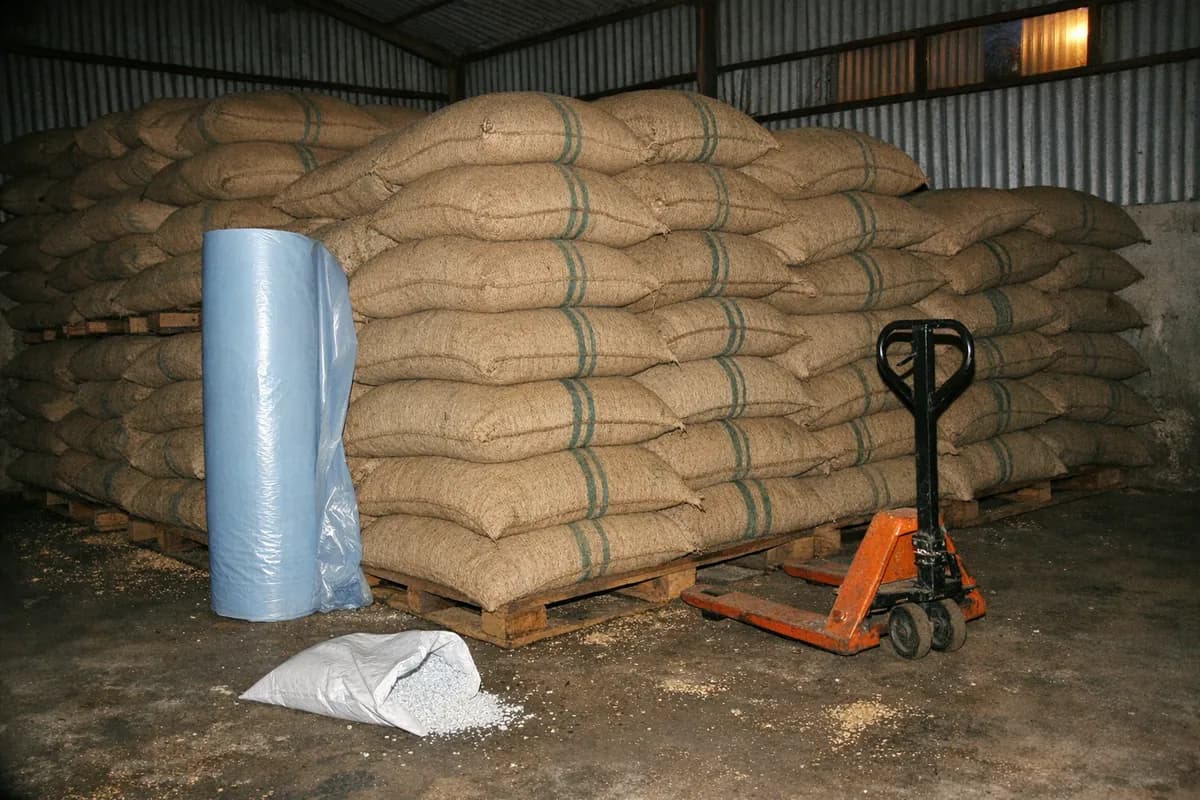
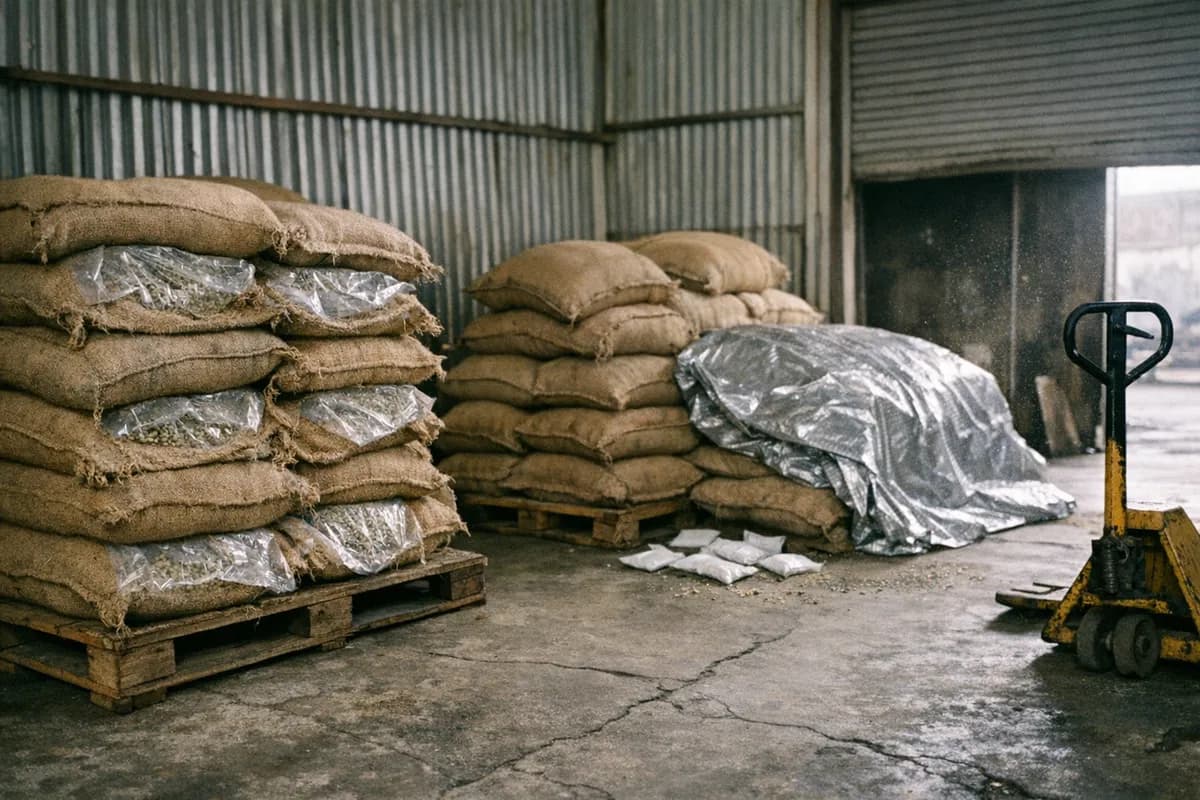
Packing also matters. Our arabica green lots use 60 kg jute bags with GrainPro liner. Our robusta green lots use 60 kg jute bags with a container liner and desiccant. Those formats support different risk controls in transit, so they should be written into the purchase order rather than left as an assumption.
Send us your target origin, grade, Incoterm, destination port, and volume through the contact page for a current quotation.
What documents and Incoterms are needed to import?
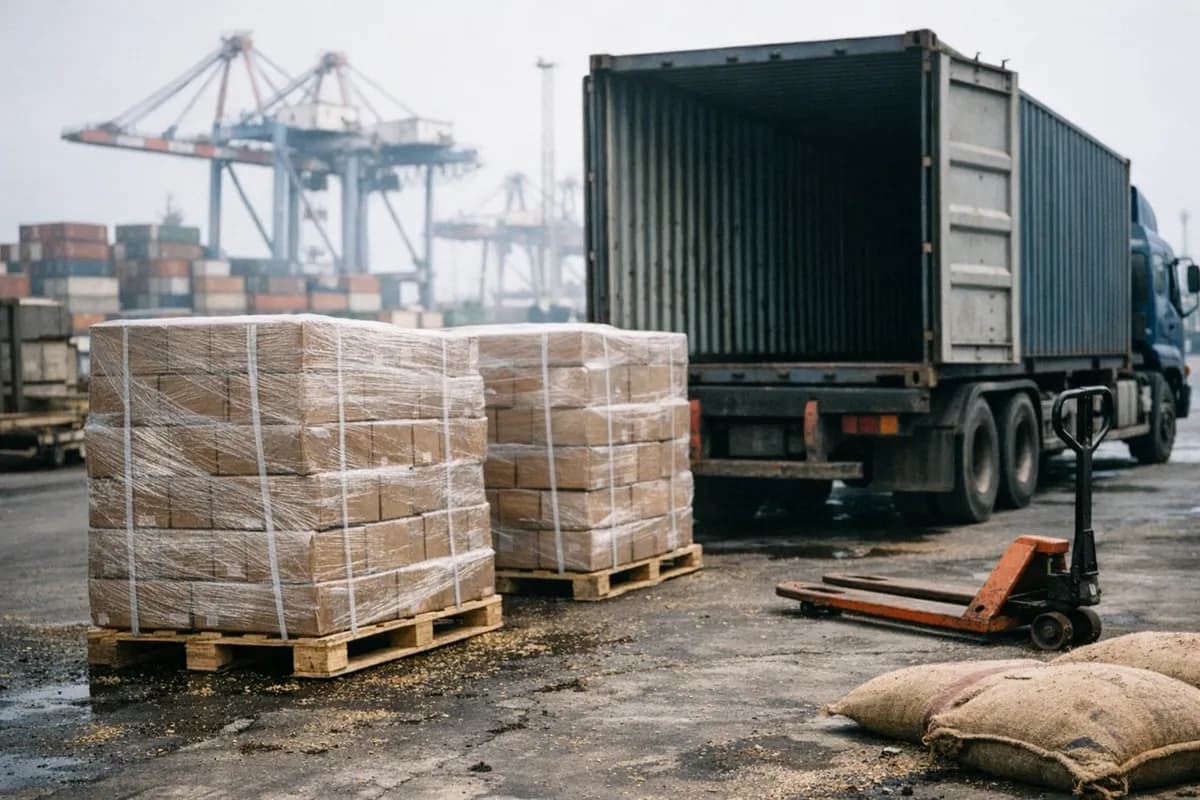
For Indonesian green coffee, buyers should align the commercial documents, shipping documents, customs code, and plant health requirements before the container is booked. Our green coffee lines are offered under FOB, CFR, or CIF, and the HS code used for unroasted coffee is 0901.11.
A standard import file usually includes a commercial invoice, packing list, bill of lading, certificate of origin when required, and phytosanitary documentation if required by the destination country. Your customs broker should confirm the exact document set for your market before contract signature, not after vessel departure.
The phytosanitary requirement is destination specific. Green coffee is an agricultural product, so many countries require plant health clearance at import. If your authority needs a specific declaration, treatment statement, or format, give that instruction before shipment. A late request can hold the document process even when the coffee is already packed.
Certificates should be requested by lot and contract line. If you are buying Organic Kintamani Bali Arabica, Fairtrade Bajawa Flores Arabica, Rainforest Alliance Gayo, 4C robusta, ISO 22000 covered supply, or Halal BPJPH covered coffee, state the certificate requirement in the purchase order and match it to the product that carries it. Not every Indonesian origin has the same certification set.
Incoterm choice should match your internal controls. FOB suits importers with contracted freight. CFR suits buyers who want the exporter to arrange freight but insure separately. CIF suits buyers who want freight and insurance included to the named destination port. Always name the port. “CIF Europe” is not a workable trade instruction. “CIF Antwerp” is.
How does the order move from sample to shipment?
A clean order moves from buying brief, to offer, to sample approval, to contract, to pre-shipment confirmation, then to vessel booking and document release. The earlier the specification is fixed, the lower the risk of price revision or shipment delay.
The first step is a written brief. Tell us the species, origin preference, grade, intended use, annual volume, first shipment size, destination port, certification requirement, and whether you want FOB, CFR, or CIF. If you are still choosing origins, we can propose a short list rather than send unrelated samples. For example, buyers comparing washed arabica for a consistent roast profile often evaluate Ijen Java against Bali Kintamani. Buyers comparing higher-grown wet hulled arabica may evaluate Gayo against Toraja Sulawesi Arabica Green Coffee Beans.
After sample approval, the contract should repeat only the agreed fields. The contract is not the place to write broad tasting language. It should state coffee, grade, screen where applicable, moisture, packing, quantity, price basis, Incoterm, shipment period, payment terms, and required documents.
Green coffee lead time from contract depends on origin and preparation. Lampung robusta and Java robusta are listed at 2 to 3 weeks from contract. Gayo, Ijen, Kintamani, Pupuan, and Kolaka are listed at 3 to 4 weeks from contract. Bajawa, Flores Manggarai, and Toraja are listed at 4 to 5 weeks from contract. These timelines cover lot preparation, checking, packing, and export readiness after the commercial terms are fixed.
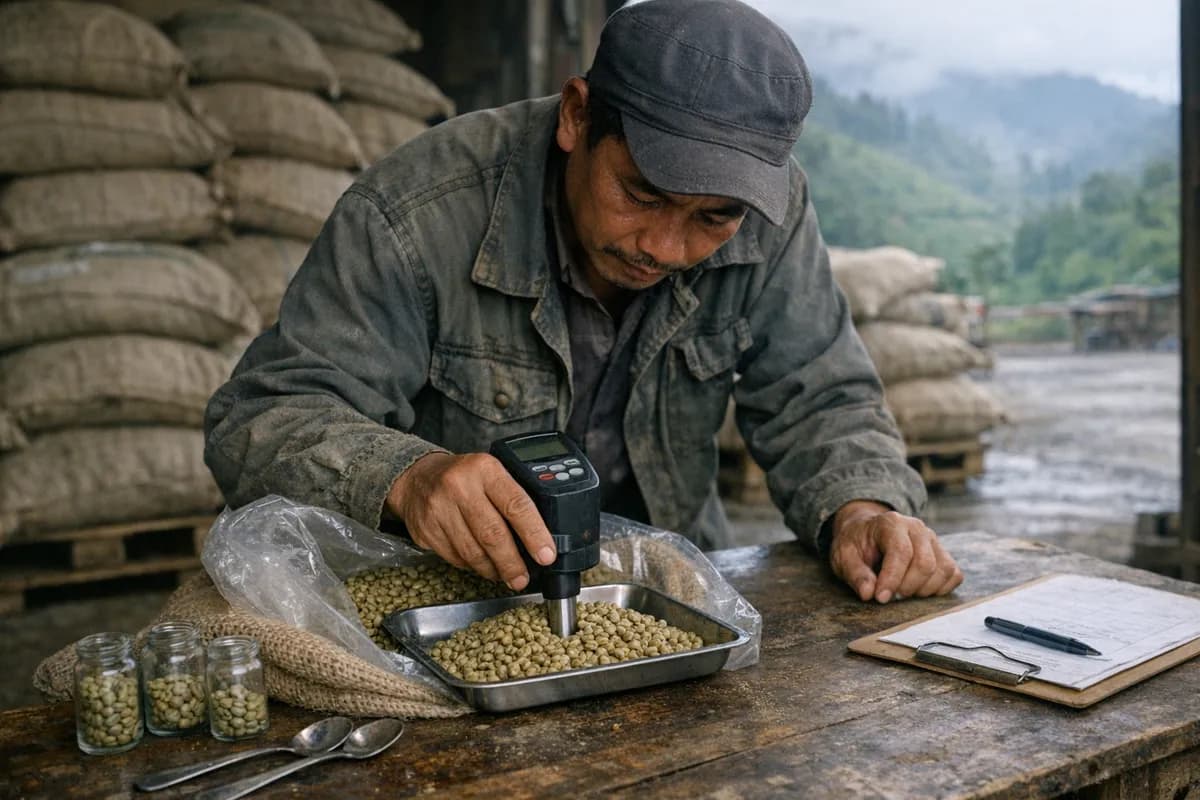
Before shipment, the buyer should approve a pre-shipment sample or retain sample protocol. The useful checks are moisture, appearance, odour, screen, defect count, and cup or roast test depending on the use. Do not wait for arrival to discover that your factory expected screen 16 when the order was priced on screen 13.
How should risk be controlled before the container leaves Indonesia?
Control risk by fixing the specification in writing, checking the sample against that specification, matching the documents to the destination market, and confirming packing before loading. Most import problems begin with an assumption that was never written into the contract.
Moisture is one of the first checks. Our arabica green coffees publish moisture ranges by origin, while our robusta green coffees are specified at 12.0 to 12.5% maximum. A buyer should match those values to its warehouse intake standard and insurance requirements. If your receiver has a tighter intake limit, state it before we quote.
Grade is the second check. SNI grade defines the physical defect band, but your roasting or extraction plant may have its own tolerance. If your plant rejects certain visible defects regardless of total count, include that in the approval process. A general “Grade 1 only” instruction may not cover every intake rule your QC department applies.
Packing is the third check. For arabica, GrainPro liners are used to protect the green coffee inside the jute bag. For robusta, container liner and desiccant are used to manage container conditions. The buyer should still confirm the receiving warehouse can unload 60 kg bags and that the bill of lading, packing list, and purchase order use the same bag count and net weight.
Season is the final commercial check. Indonesian origins do not harvest at the same time. A coffee contracted near its main harvest window may have different availability from a coffee requested late in the crop cycle. If your programme needs repeated shipments, plan allocation by origin rather than treating Indonesian green coffee as one interchangeable stock pool.
A good import process is simple but strict: define the coffee, approve the sample, contract the exact line, confirm the documents, and load what was agreed. That is how we prefer to work with importers, roasters, manufacturers, and distributors buying Indonesian green coffee for repeat supply.